
Sheets
Mid
Grit · 400
3M Wetordry, 400 Grit
400 wet. Where primer stops being primer and starts being a base.
3M · Line profile
Silicon carbide, waterproof backing, and a number that means more than it says.
Wetordry is 3M’s silicon carbide paper on a waterproof backing: the black sheet in every body shop drawer and every guitar finisher’s bucket. You can use it dry. It earns its name under a trickle of water, which flushes the swarf, keeps the surface cool and lets the high grits leave a scratch fine enough to polish out.
The catch is the number. 3M prints Wetordry grits without a P in front, the way US CAMI-graded paper is marked. Above 220 the two systems split hard, so a 400 Wetordry sheet sits much closer to a European P800 than to a P400. If you are following a paint maker’s instructions written in P-grades, that gap is the difference between a clean polish and a sanding mark you chase all afternoon.
The chart
| Wetordry grit | If CAMI: size · P-grade |
|---|---|
| 400Knocking down primer and runs before color. Wet.3M Wetordry, 400 Grit → | ~23 µm · ≈ P800 |
| 600Final primer sand; lacquer between coats.3M Wetordry 600 Grit → | ~16 µm · ≈ P1200 |
| 800Color coat leveling; first step on clear-coat defects.3M Wetordry, 800 Grit → | ~12.6 µm · ≈ P1500 |
| 1000Orange peel and dust nibs in cured clear.3M Wetordry, 1000 Grit → | ~10.3 µm · ≈ P2000 |
| 1500Refining the 1000 scratch before polish.3M Wetordry, 1500 Grit → | above published CAMI tables |
| 2000The last paper step before compound on most paint.3M Wetordry, 2000 Grit → | above published CAMI tables |
| 3000Show-finish prep; makes compounding short.3M Wetordry, 3000 Grit → | above published CAMI tables |
Micron and P-grade columns assume the CAMI reading. Gesswein’s 3M Wetordry listing gives the grits as bare numbers (80 through 2500) and the backing by grit range; we have not found a 3M document that names the grading standard outright, so treat the column as the CAMI reading of the number on the sheet.
Published CAMI tables stop at 1000. Above that, we don’t assign a micron value, because nobody we can cite does.
Another brand's numbers to match? The grit converter lines up P-grades, CAMI, microns and Trizact A-grades.
Sources: Gesswein: 3M Wetordry silicon carbide sandpaper · CAMI / FEPA table (Wikipedia rev. 1127917881)
Wetordry is loose grain on paper: cheap, flexible, fine by hand on a block. Trizact is 3M’s engineered pyramid abrasive, usually on foam discs for a machine, and its scratch stays consistent longer as the disc wears. For a single panel, Wetordry and patience. For a whole car, Trizact on a dual-action sander pays for itself in time. The 3000 vs 3000 comparison runs the numbers.
In the catalog
400 wet. Where primer stops being primer and starts being a base.
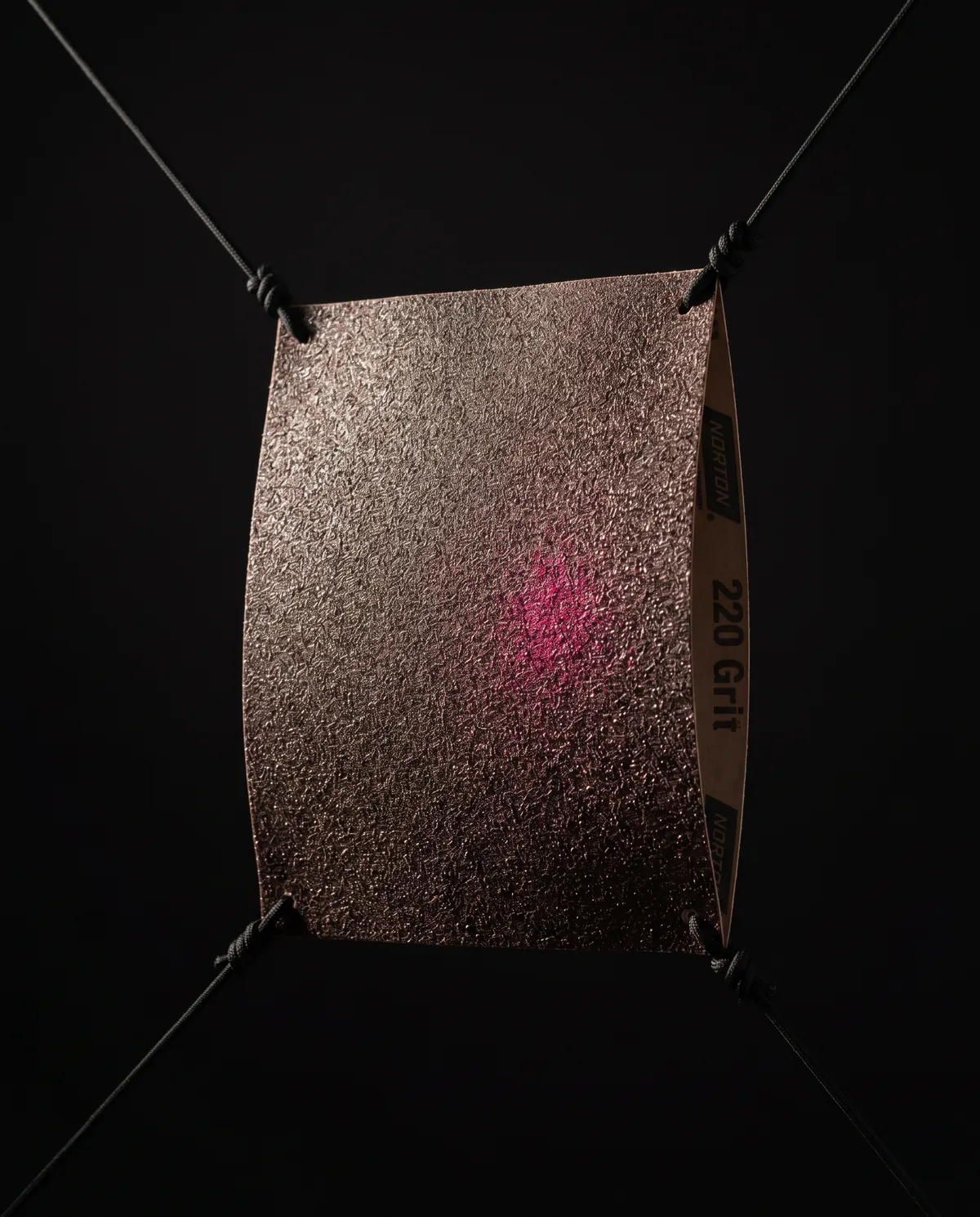
600 wet-or-dry. The first step in the sequence that ends with something worth looking at.
800. Where coarse becomes a memory and smooth starts to show.

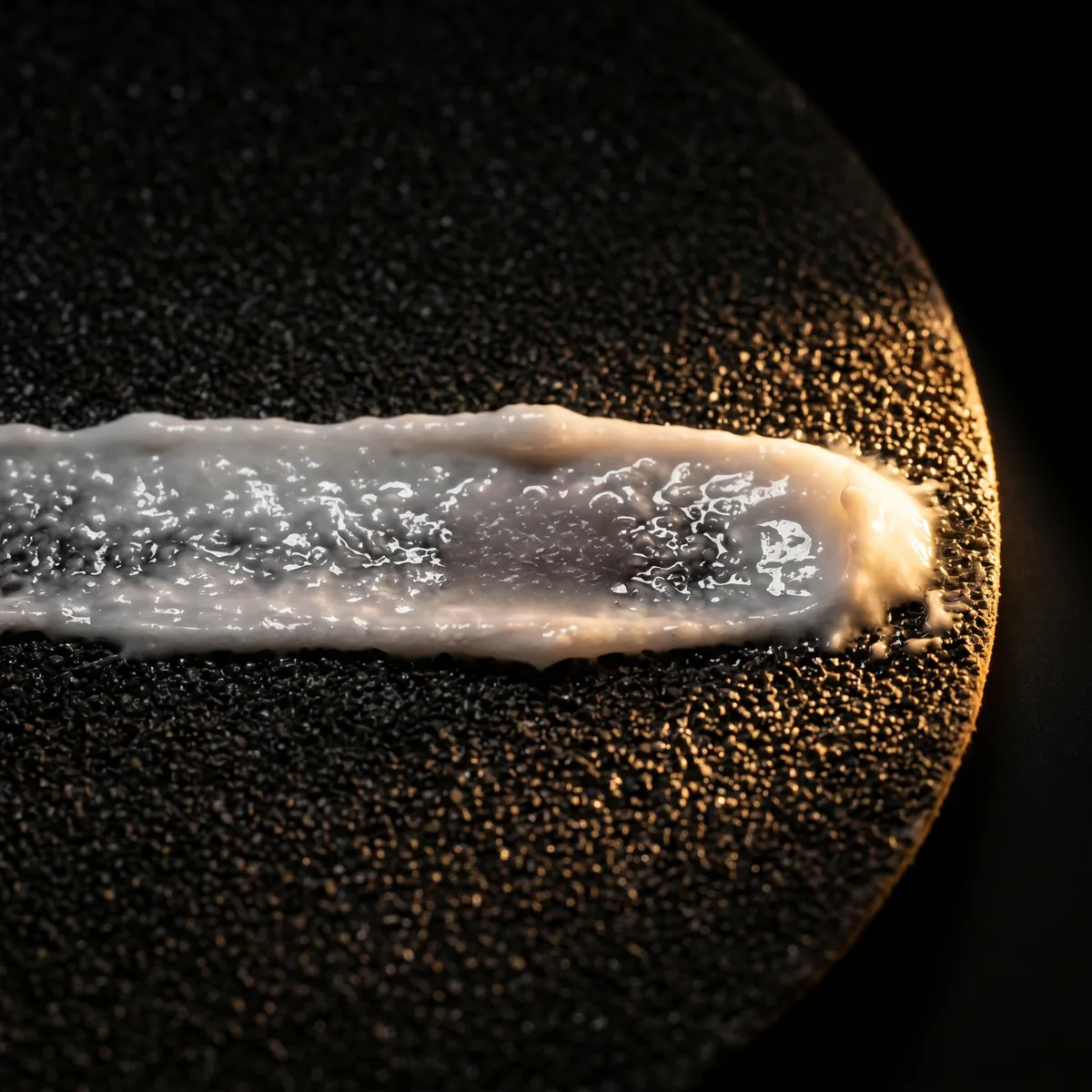
1500. The last step before the compound does the talking.

Goes on wet, works slow, leaves glass. The kind of finish people reach out and touch.
3000. The last step before the surface starts showing off on its own.
The grits between the rough work and the reveal.
Questions people ask
3M prints Wetordry grits as bare numbers, which is how CAMI-graded paper is marked in the US. Read that way, 400 Wetordry averages about 23 microns, which is close to a P800, not a P400.
Silicon carbide grain on a waterproof paper backing. Retail listings give the backing by grit: heavier 431Q paper for 80 to 180, lighter 413Q for 220 to 600 and 401Q for the 1000-plus grits.
Yes. It cuts dry like any silicon carbide paper. Water just keeps it from loading and keeps the heat down, which matters most above 600.
Keep moving
Other lines