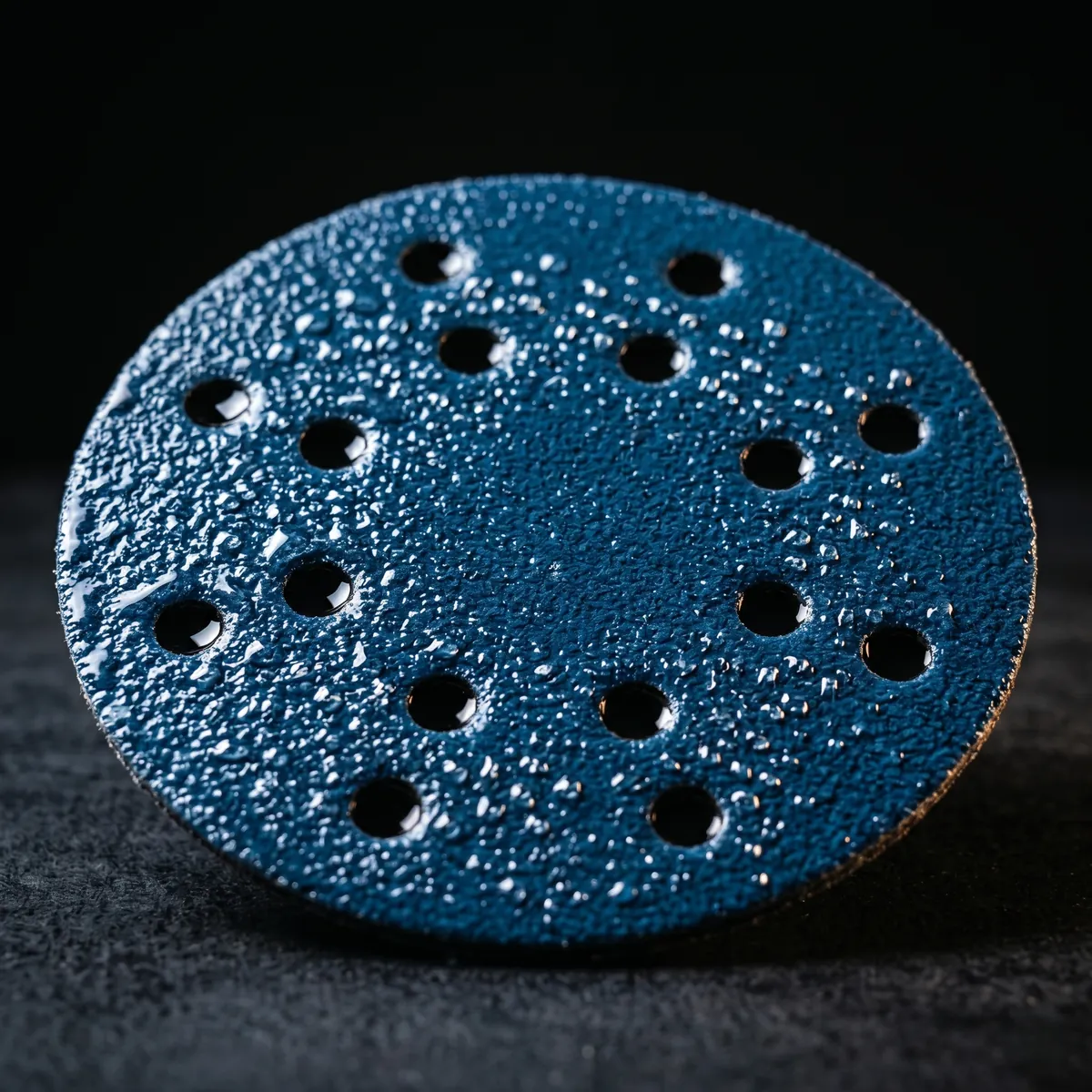
Discs
Pro
Grit · 80-400 assorted
Festool Granat 5-Inch Disc Set, Multi-Grit (25-pack)
The disc the Festool deserves. Everything else is settling.
Festool · Line profile
Expensive, P-graded, and worth knowing which machine it goes on.
Granat is Festool’s general-purpose disc for wood and paint. Festool describes the grain as self-sharpening ceramic with stable aluminum oxide, under a non-stick coating that keeps dust from packing in. It is graded in FEPA P-grades, and the hole pattern is built for Festool’s dust extraction, which is half of why it lasts.
It is not cheap. What you buy is a disc that keeps cutting at the same rate for longer, which on a full day of cabinet faces means fewer disc changes and a scratch that doesn’t drift halfway through a panel.
The chart
| Granat grade | Size · nearest CAMI |
|---|---|
| P40Stripping and heavy leveling; usually on a Rotex.Festool Granat 5" 40 Grit → | ~425 µm · ≈ 40 CAMI |
| P60Removing old finish; flattening glue-ups.Festool Granat 5" 60 Grit → | ~269 µm · ≈ 60 CAMI |
| P80First pass on raw stock.Festool Granat 5" 80 Grit → | ~201 µm · ≈ 80 CAMI |
| P100Clearing the 80 scratch.Festool Granat 5" 100 Grit → | ~162 µm · ≈ 80–100 CAMI |
| P120General smoothing; paint prep.Festool Granat 5" 120 Grit → | ~125 µm · ≈ 120 CAMI |
| P150Pre-finish on softwoods.Festool Granat 5" 150 Grit → | ~100 µm · ≈ 150 CAMI |
| P180Pre-stain on hardwoods.Festool Granat 5" 180 Grit → | ~82 µm · ≈ 180 CAMI |
| P220Final pre-finish pass.Festool Granat 5" 220 Grit → | ~68 µm · ≈ 220 CAMI |
| P320Between coats.Festool Granat 5" 320 Grit → | ~46.2 µm · ≈ 240–320 CAMI |
| P400Fine between-coat work.Festool Granat 5" 400 Grit → | ~35 µm · ≈ 320 CAMI |
| P600Lacquer and paint leveling.Festool Granat 5" 600 Grit → | ~25.8 µm · ≈ 360 CAMI |
| P800Pre-polish on finishes.Festool Granat 5" 800 Grit → | ~21.8 µm · ≈ 400 CAMI |
Mineral and coating are from Festool’s Granat page. The rows are the 5-inch Granat grades in our catalog; micron and CAMI columns are computed from the published CAMI/FEPA table.
Another brand's numbers to match? The grit converter lines up P-grades, CAMI, microns and Trizact A-grades.
Sources: Festool USA: Granat abrasives · CAMI / FEPA table (Wikipedia rev. 1127917881)
An ETS is a random orbital sander, nothing else: the pad spins freely while it orbits, so the scratch never repeats and the finish stays clean. The number after the slash in the model name is the orbit in millimetres, so an ETS EC 125/3 runs a 3 mm stroke, which suits finishing grits.
A Rotex is dual-mode. Flip a switch and the pad is gear-driven in a rotary-plus-orbit motion that removes material like a much more aggressive tool and can even polish; flip it back and it’s a random orbital. Coarse Granat (40 to 80) and a Rotex strip and flatten fast. Fine Granat (180 and up) and an ETS finish without fuss. One person, one sander, one budget: the ETS for furniture, the Rotex if stripping and refinishing is half the work. The full breakdown is in ETS EC 125 vs Rotex 150.
In the catalog
The disc the Festool deserves. Everything else is settling.
Six-inch format. Festool quality. Everything the name promises.
Festool grain on drywall. The machine finally has paper that keeps up.
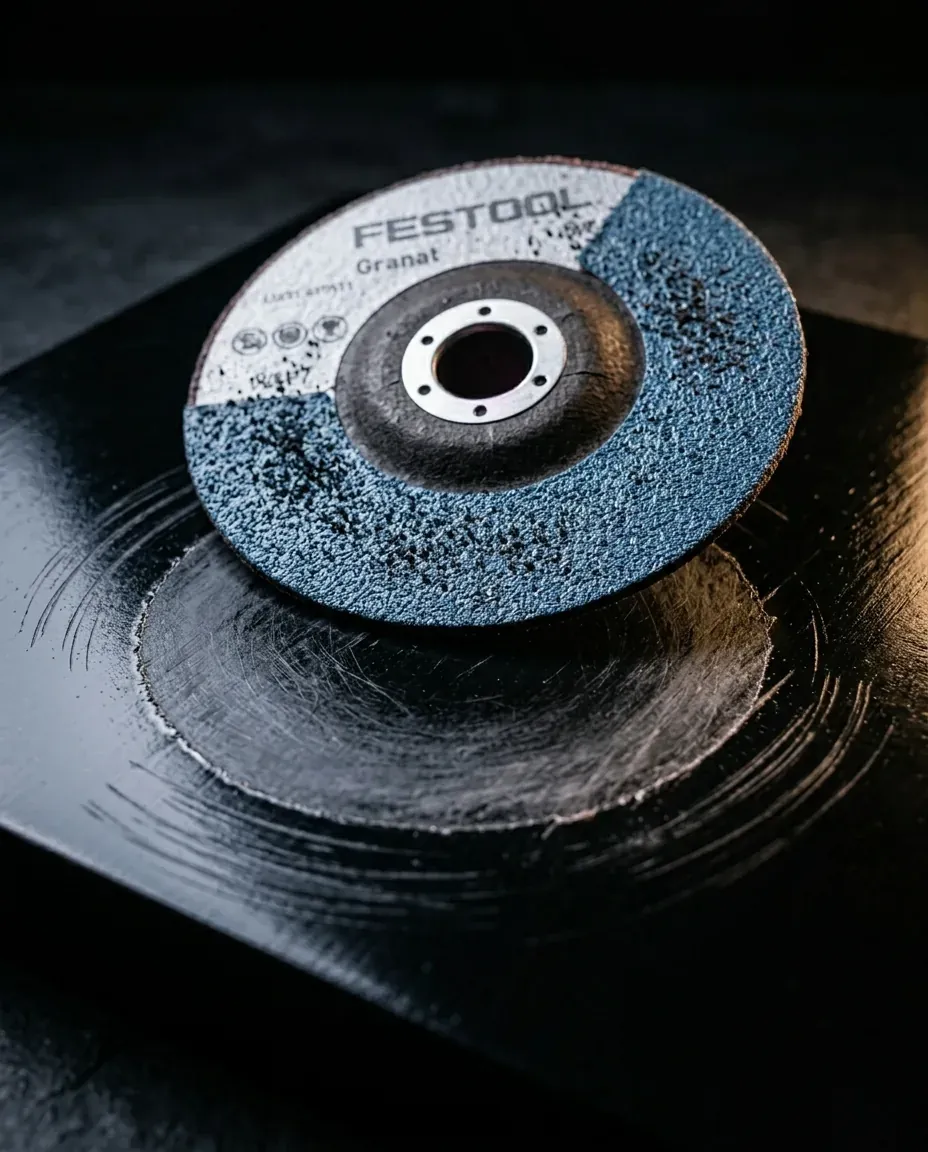
Pyramid grain that sharpens itself. Opens the surface, then steps back.
80 on Granat: where precision starts and the surface first takes notice.
Standard prep. German pyramid grain. Everything after starts here.
220. The dress rehearsal. Granat makes sure the surface shows up ready.
Extra fine. Holds its edge past where everything else gave up.
The last pass before the gloss answers every decision that came before it.

The Festool. Once you've used one, every other sander apologizes for itself.
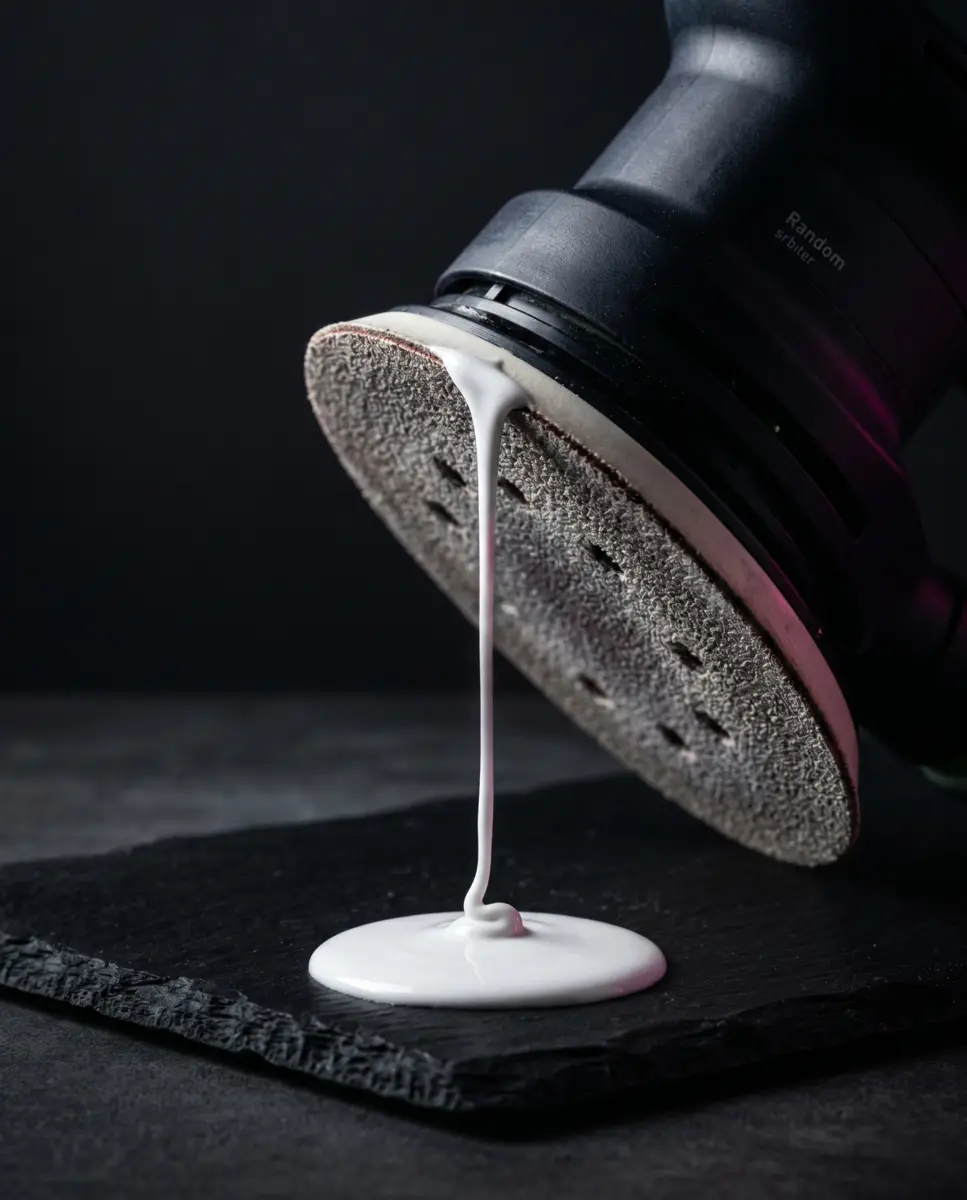
Two modes. One doesn't ask nicely. The other leaves nothing to follow up.
Questions people ask
Yes. Granat grades are FEPA P-grades, so above P220 they run coarser than CAMI-marked US paper with the same number.
Festool describes it as self-sharpening ceramic and stable aluminum oxide, with a non-stick coating that resists clogging.
An ETS is random orbital only and is the finishing sander. A Rotex adds a gear-driven rotary mode for fast stock removal and polishing. Mostly finishing work: ETS. Lots of stripping and refinishing: Rotex.