The verdict
Where this pick fits.
Goes on wet. Works slow. Comes off leaving glass. The kind of finish that makes people reach out and touch without asking permission.
Slow, wet, patient work that leaves a finish people touch before they ask.
Quick take
- Best for: auto clear coat, polishing, wet sanding
- Format: Sheets
- Tier: Pro tier
- Grit lane: 2000
The full read
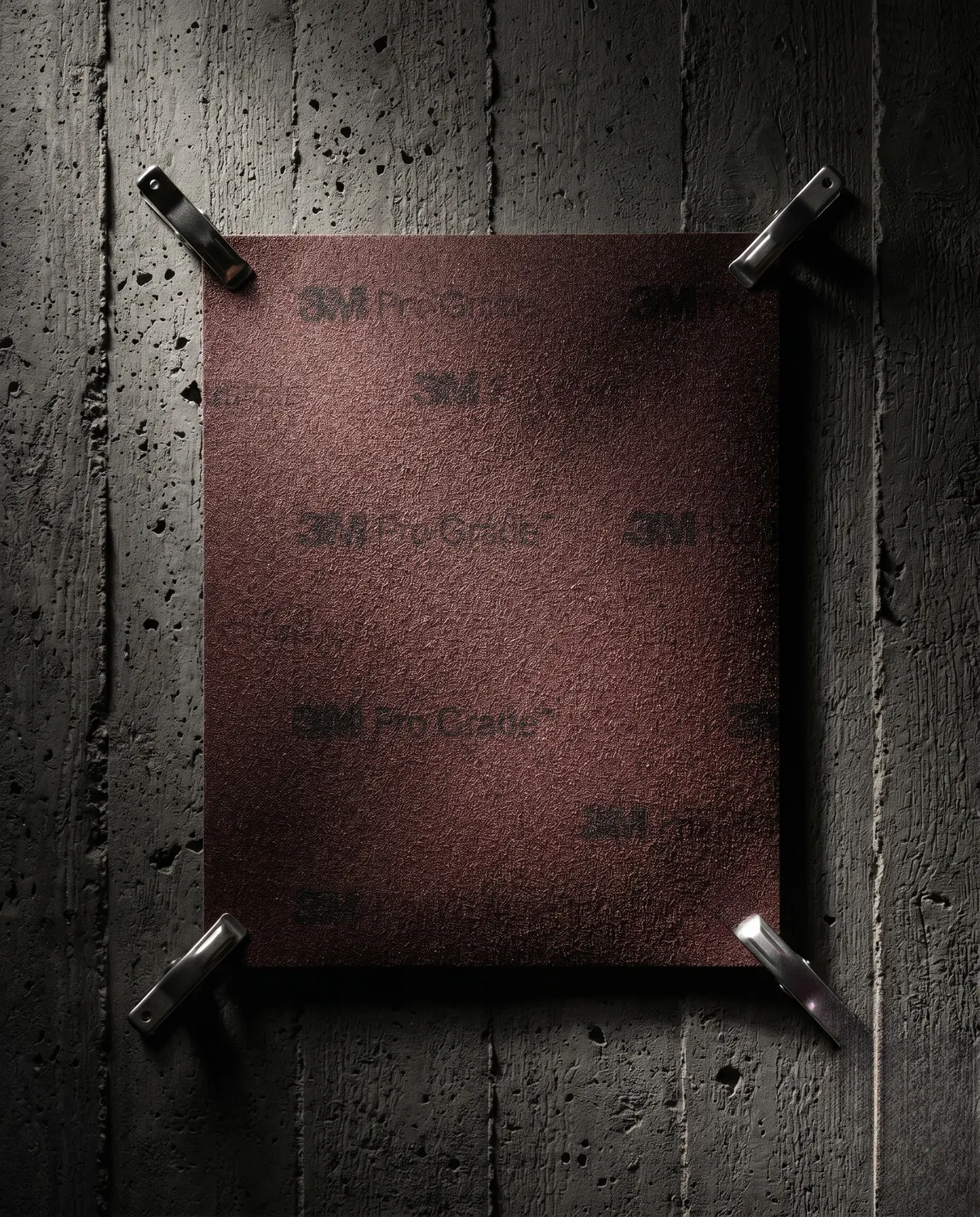
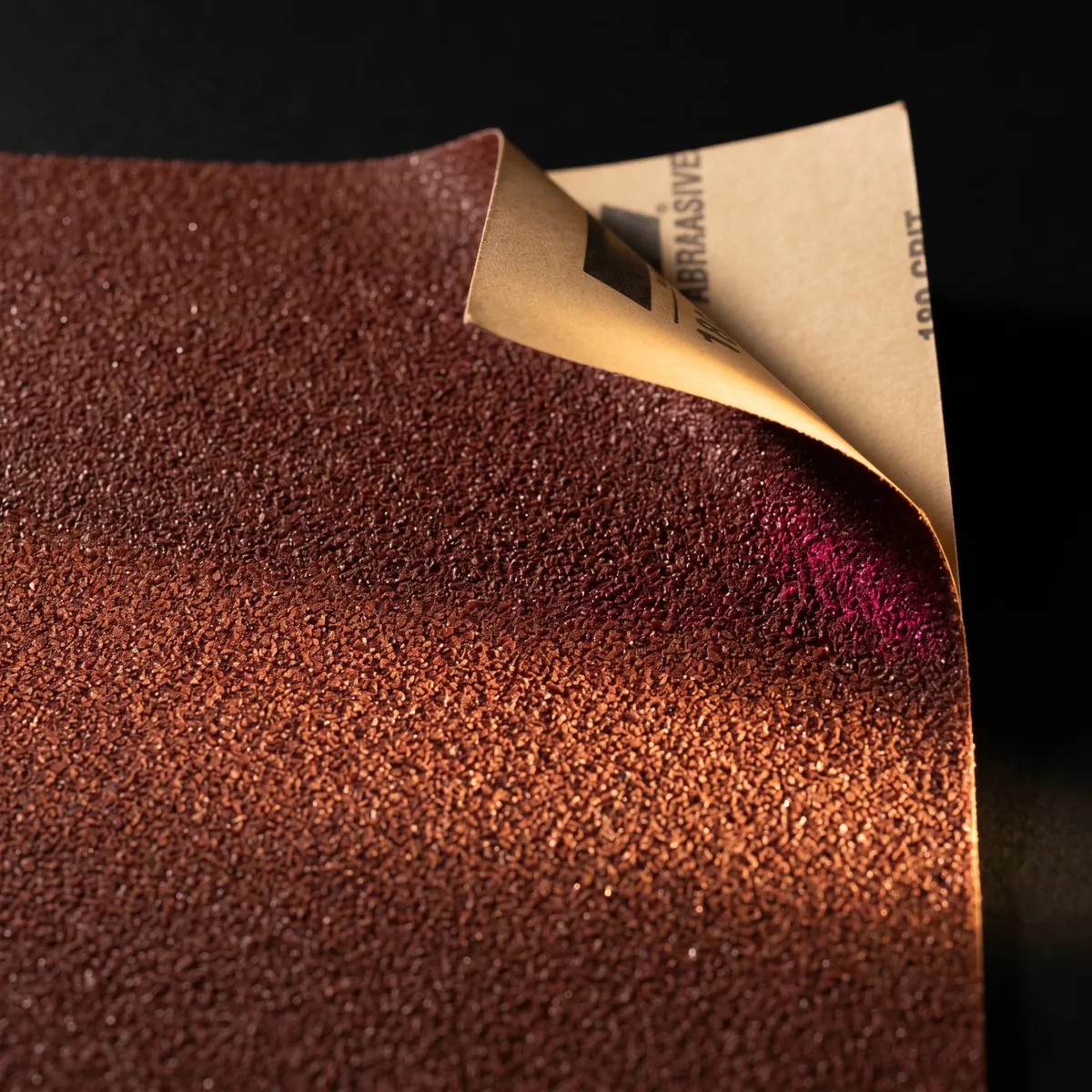
At 2000 grit you are barely removing material at all: you're persuading it. 3M Wetordry is silicon carbide on a waterproof backing, and it's built for the slow, wet, unhurried work of taking an automotive clear coat or a polished finish from 'nearly there' to genuinely flawless. Run it dry and you'll gum it up; the water is not optional, and neither is the patience.
The reason it goes on wet is craft, not theater: the water floats away the removed material and keeps the fine grain from clogging, so each pass keeps cutting evenly instead of loading up and scratching. Silicon carbide is the right grain for clear coat and paint because it's hard and it stays sharp through the slurry. Done right, it leaves a surface so uniform that the polishing wheel afterward has almost nothing left to argue with.
This is a specialist's sheet, and pro tier for good reason. Auto detailers, paint-correction people, and anyone chasing a mirror on lacquer will get exactly what they came for. If you're sanding a deck, this is the wrong end of the drawer entirely: 2000 grit will only frustrate you on anything that isn't already close to perfect.
Use it when
The fit is obvious.
- · Reach for the 3M Wetordry, 2000 Grit when the job is auto clear coat, polishing, and wet sanding: that is the fight it was built for.
- · Silicon carbide bites sharp and fast, and it loves water. Brittle, brilliant, a little reckless: the grain that leaves glass when you keep it wet.
- · This is refinement territory. It flatters a surface that is already close; it will not rescue a rough one.
Skip it when
The job asks for something else.
- · Leave it if you still need to remove stock, paint, filler, or machine marks; fine grit only polishes over problems it cannot fix.
- · Leave it if the budget is tight enough that value-per-pack matters more than top-end feel and longevity: good mid-tier paper will get you there slower.
- · Leave it on the shelf if you are flattening big panels all day: a random orbital keeps pressure even where your hand drifts.
Best for
Where it earns its keep.
- · auto clear coat
- · polishing
- · wet sanding
Keep moving
Useful next clicks.
Before you buy
Compare it head to head.
3M Wetordry, 2000 Grit vs. 3M Wetordry, 3000 Grit
How close to mirror do you actually want to land.
Read the comparison →
3M Wetordry, 2000 Grit vs. Meguiar's Ultimate Compound
They aren't really alternatives: they're consecutive steps.
Read the comparison →
3M Wetordry Assorted Pack, 600 to 1500 Grit vs. 3M Wetordry, 2000 Grit
The climb or the landing.
Read the comparison →
Buyer questions
The practical questions.
What is the 3M Wetordry, 2000 Grit actually good at?
Slow, wet, patient work that leaves a finish people touch before they ask. Goes on wet. Works slow. Comes off leaving glass. The kind of finish that makes people reach out and touch without asking permission. In short: it earns its keep on auto clear coat, polishing, and wet sanding.
Is 2000 the right grit lane for this?
It sits closest to 2000 grit. This is refinement territory. It improves the surface that is already close rather than rescuing a rough one.
What should you put it up against before buying?
Start with 3M Wetordry, 2000 Grit vs. 3M Wetordry, 3000 Grit, 3M Wetordry, 2000 Grit vs. Meguiar's Ultimate Compound, and 3M Wetordry Assorted Pack, 600 to 1500 Grit vs. 3M Wetordry, 2000 Grit. Those pages show exactly where this pick wins and where a nearby one quietly does it better.
Rough start. Smooth finish. The gap between is where the work happens.
Next step
Go deeper.
House rule
UltraRough earns a small commission on Amazon links. Your price is identical. Our take doesn't soften for anyone.