The verdict
Where this pick fits.
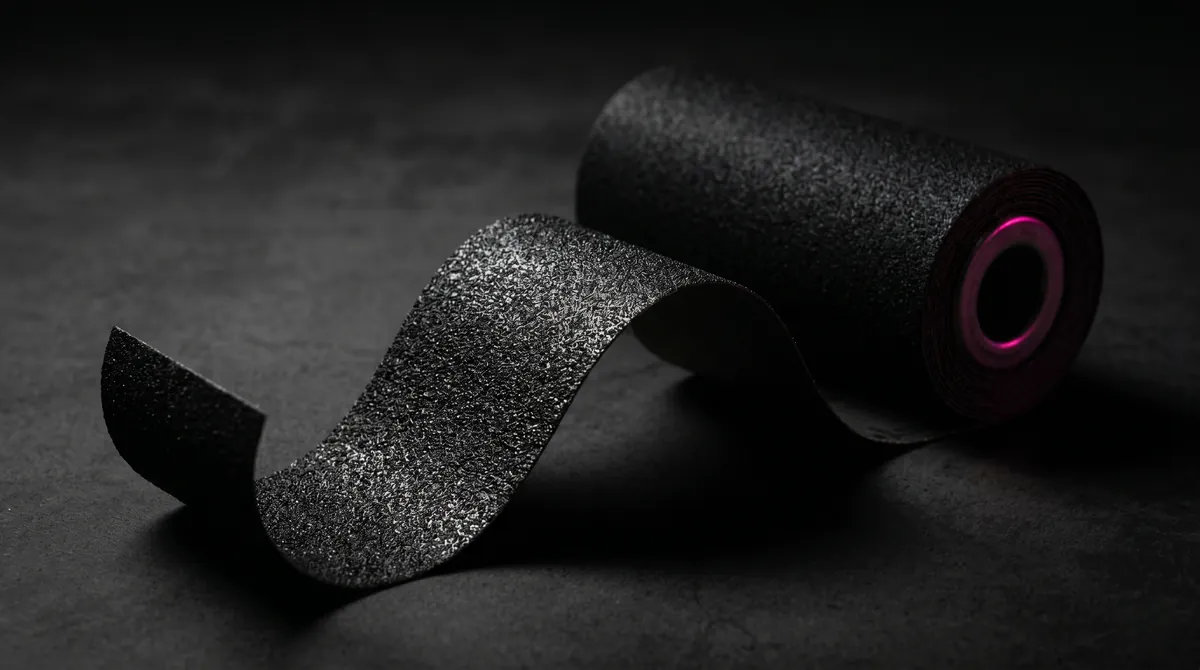
Silicon carbide on a PSA-backed roll. Tear it, stick it down, work it into anything that won't hold still. 3M's 426U keeps cutting long after cheaper rolls have given up.
Adhesive-backed SiC roll for detail work. It sticks around.
Quick take
- Best for: metal finishing, contour work, wet sanding
- Format: Rolls
- Tier: Mid tier
- Grit lane: 80, 100, 120, 150
The full read
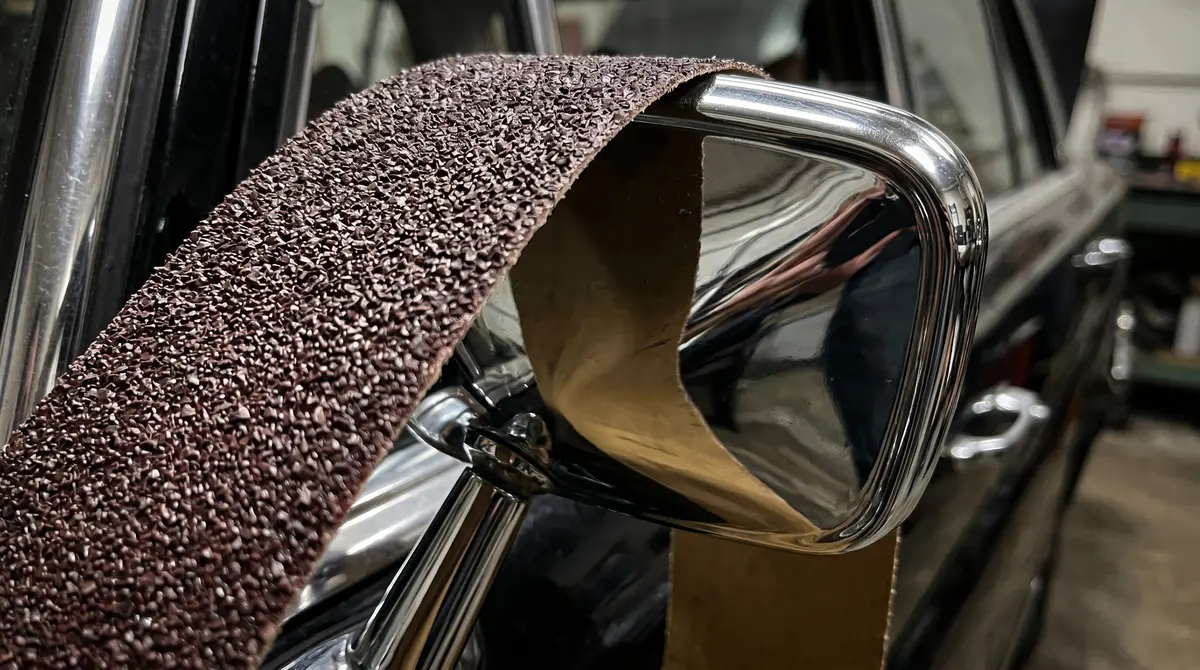
Silicon carbide is the sharp-tongued cousin of aluminum oxide: harder, more brittle, and it cuts by fracturing to a fresh edge rather than dulling politely. At 120 grit on 3M's 426U cloth backing, that means a roll that keeps finding new bite well after a cheaper paper has smoothed over and quit. It's built for the finer, more particular work: metal finishing, feathering, and the wet sanding where you want a clean cut and not a fight.
The Stikit part is the seduction: a PSA adhesive back that you peel, press down, and it stays put. Tear a strip, stick it to a block or a spinning pad, and it holds its ground through the whole pass instead of shifting under your hand. Cloth backing gives it the flex to follow a contour and the toughness to keep working when a paper roll would tear at the first hard edge.
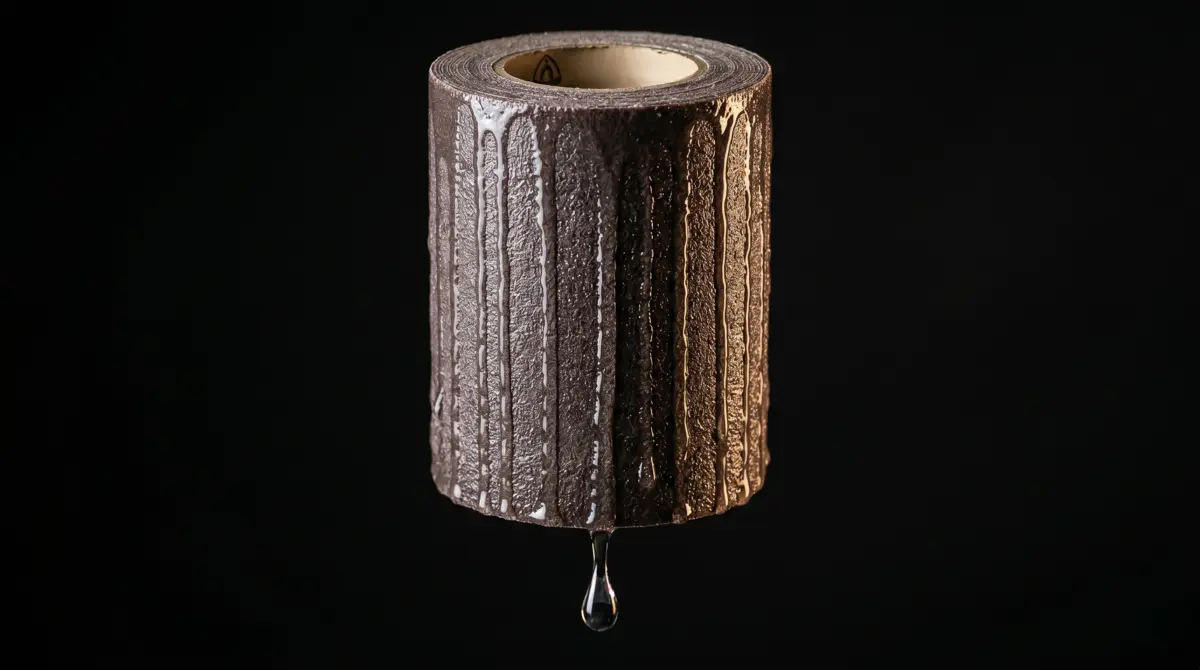
A dependable 4.2 for anyone who does detail and finish work rather than heavy stock removal. Silicon carbide loves water, so this is a natural for wet sanding between coats. Just know what you're buying: 120 grit and SiC's fast-fracturing grain make it a finisher, not a demolition crew. Reach for aluminum oxide when there's real material to move.
Use it when
The fit is obvious.
- · Reach for the 3M Stikit 426U Roll (120) when the job is metal finishing, contour work, and wet sanding: that is the fight it was built for.
- · Silicon carbide bites sharp and fast, and it loves water. Brittle, brilliant, a little reckless: the grain that leaves glass when you keep it wet.
- · This is the working middle: enough bite to matter, refined enough to leave the job somewhere worth continuing.
Skip it when
The job asks for something else.
- · Leave it if you are actually solving a different stage of the climb than the one this pick was chosen for.
- · Leave it if you already know you want the premium option; a mid-tier pick is a compromise, and you clearly are not in the mood for one.
- · Leave it if you need a clean hook-and-loop setup for a machine: a roll is a hand tool at heart.
Best for
Where it earns its keep.
- · metal finishing
- · contour work
- · wet sanding
Keep moving
Useful next clicks.
Before you buy
Compare it head to head.
3M Pro Grade 2.75" × 25yd Sanding Roll, 80 Grit vs. 3M Stikit 426U Silicon Carbide Roll, 120 Grit
Same form factor. Different surface, different grain.
Read the comparison →
Forney 71804 1" × 10yd Emery Cloth Bench Roll, 120 Grit vs. 3M Stikit 426U Silicon Carbide Roll, 120 Grit
How you want the abrasive to attach.
Read the comparison →
Buyer questions
The practical questions.
What is the 3M Stikit 426U Roll (120) actually good at?
Adhesive-backed SiC roll for detail work. It sticks around. Silicon carbide on a PSA-backed roll. Tear it, stick it down, work it into anything that won't hold still. 3M's 426U keeps cutting long after cheaper rolls have given up. In short: it earns its keep on metal finishing, contour work, and wet sanding.
Is 120 the right grit lane for this?
It sits closest to 80 grit, 100 grit, 120 grit, and 150 grit. This is a cutting stage, not a finish stage. Use it to remove material, not to fake smoothness.
What should you put it up against before buying?
Start with 3M Pro Grade 2.75" × 25yd Sanding Roll, 80 Grit vs. 3M Stikit 426U Silicon Carbide Roll, 120 Grit and Forney 71804 1" × 10yd Emery Cloth Bench Roll, 120 Grit vs. 3M Stikit 426U Silicon Carbide Roll, 120 Grit. Those pages show exactly where this pick wins and where a nearby one quietly does it better.
Rough start. Smooth finish. The gap between is where the work happens.
Next step
Go deeper.
House rule
UltraRough earns a small commission on Amazon links. Your price is identical. Our take doesn't soften for anyone.