The verdict
Where this pick fits.
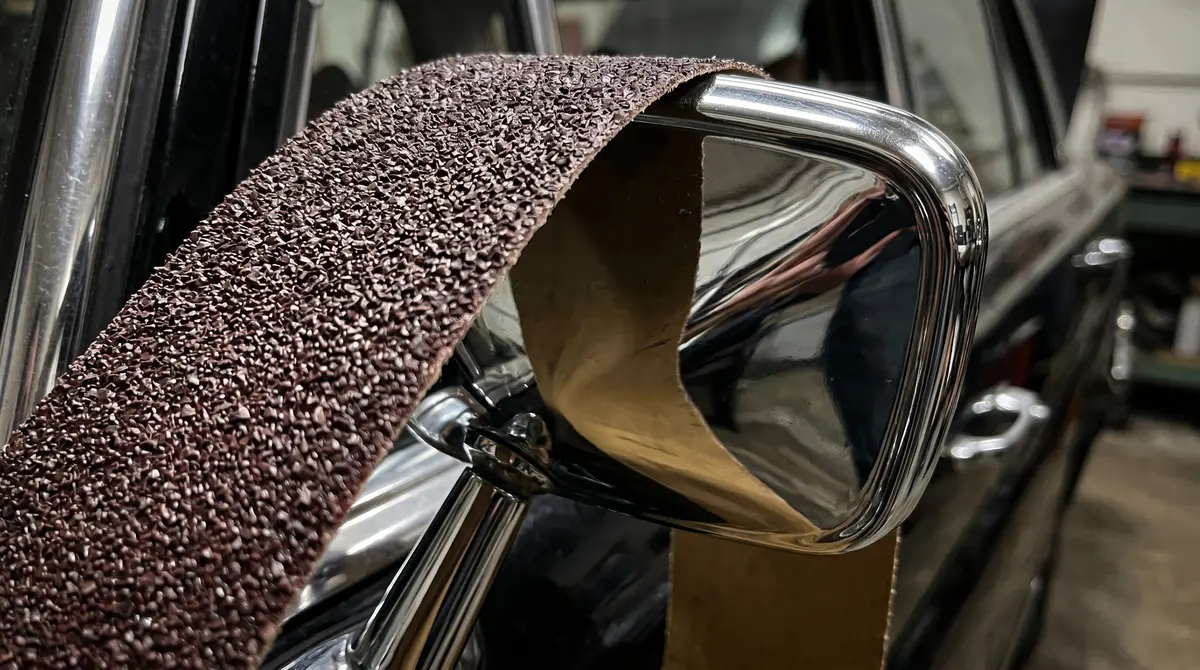
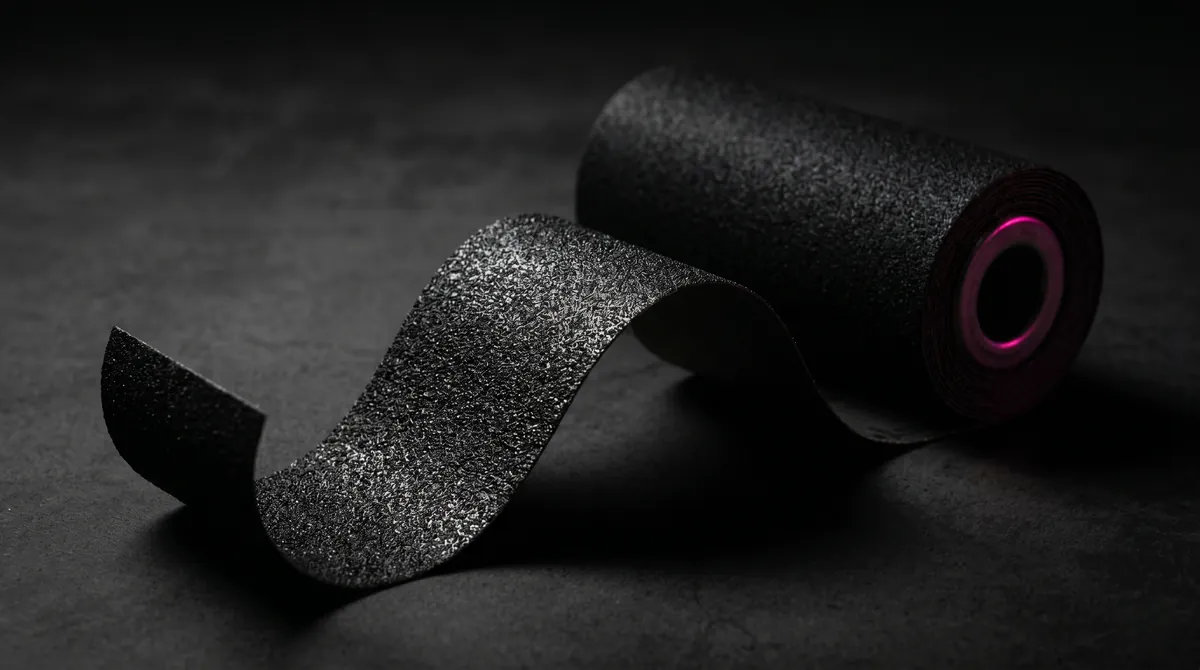
Tear off what you need, wrap it tight around whatever requires attention, and work it by hand. Nothing left on the roll goes to waste.
Emery cloth by the yard. Old-school, oily-shop reliable.
Quick take
- Best for: contours, metal hand-finishing, pipe work
- Format: Rolls
- Tier: Mid tier
- Grit lane: 80, 100, 120, 150
The full read
Emery cloth by the yard is one of those old-shop staples that never got fancy because it never needed to. Forney's 71804 is a 1-inch by 10-yard bench roll of 120-grit aluminum oxide on a flexible cloth backing: you tear off exactly as much as the job wants, wrap it tight around a pipe, a rod, or whatever contour needs attention, and work it by hand. The cloth backing is the whole trick: it bends around curves that a stiff sheet would never follow.
This is contour and metal hand-finishing gear, and 120 grit is the versatile middle where it cleans up rust, deburrs edges, and smooths pipe and rod without being so coarse it gouges. Because it comes off a roll, there's no waste: a narrow strip does narrow work, and whatever's left stays on the spool for next time. Mid-tier, honest, and about as far from a fragrance ad as abrasives get.
Get it if you work metal by hand, chase contours, or want a roll of reliable oily-shop cloth living on the bench for whenever something needs a quick going-over. It won't replace discs or sheets for flat work, it's a hand tool through and through, but for wrapping, stripping, and finishing by feel, it's old-school dependable.
Use it when
The fit is obvious.
- · Reach for the Forney Emery Cloth Roll (120) when the job is contours, metal hand-finishing, and pipe work: that is the fight it was built for.
- · Aluminum oxide is the reliable one: cheap, tough, no surprises and no complaints. It will outlast your patience before it outlasts the job.
- · This is the working middle: enough bite to matter, refined enough to leave the job somewhere worth continuing.
Skip it when
The job asks for something else.
- · Leave it if you are actually solving a different stage of the climb than the one this pick was chosen for.
- · Leave it if you already know you want the premium option; a mid-tier pick is a compromise, and you clearly are not in the mood for one.
- · Leave it if you need a clean hook-and-loop setup for a machine: a roll is a hand tool at heart.
Best for
Where it earns its keep.
- · contours
- · metal hand-finishing
- · pipe work
Before you buy
Compare it head to head.
Buyer questions
The practical questions.
What is the Forney Emery Cloth Roll (120) actually good at?
Emery cloth by the yard. Old-school, oily-shop reliable. Tear off what you need, wrap it tight around whatever requires attention, and work it by hand. Nothing left on the roll goes to waste. In short: it earns its keep on contours, metal hand-finishing, and pipe work.
Is 120 the right grit lane for this?
It sits closest to 80 grit, 100 grit, 120 grit, and 150 grit. This is a cutting stage, not a finish stage. Use it to remove material, not to fake smoothness.
What should you put it up against before buying?
Start with Forney 71804 1" × 10yd Emery Cloth Bench Roll, 120 Grit vs. 3M Stikit 426U Silicon Carbide Roll, 120 Grit. Those pages show exactly where this pick wins and where a nearby one quietly does it better.
Rough start. Smooth finish. The gap between is where the work happens.
Next step
Go deeper.
House rule
UltraRough earns a small commission on Amazon links. Your price is identical. Our take doesn't soften for anyone.