Form
Sponges
Grit
fine to coarse
Material
aluminum oxide
The verdict
Where this pick fits.
Squeezes into any contour, rinses clean, and comes back ready. Angled for corners. Not everything worth reaching for needs to be rigid.
Wet-or-dry foam that gets into the corners rigid paper sulks about.
Quick take
- Best for: drywall, wet sanding, curved surfaces
- Format: Sponges
- Tier: Budget tier
The full read
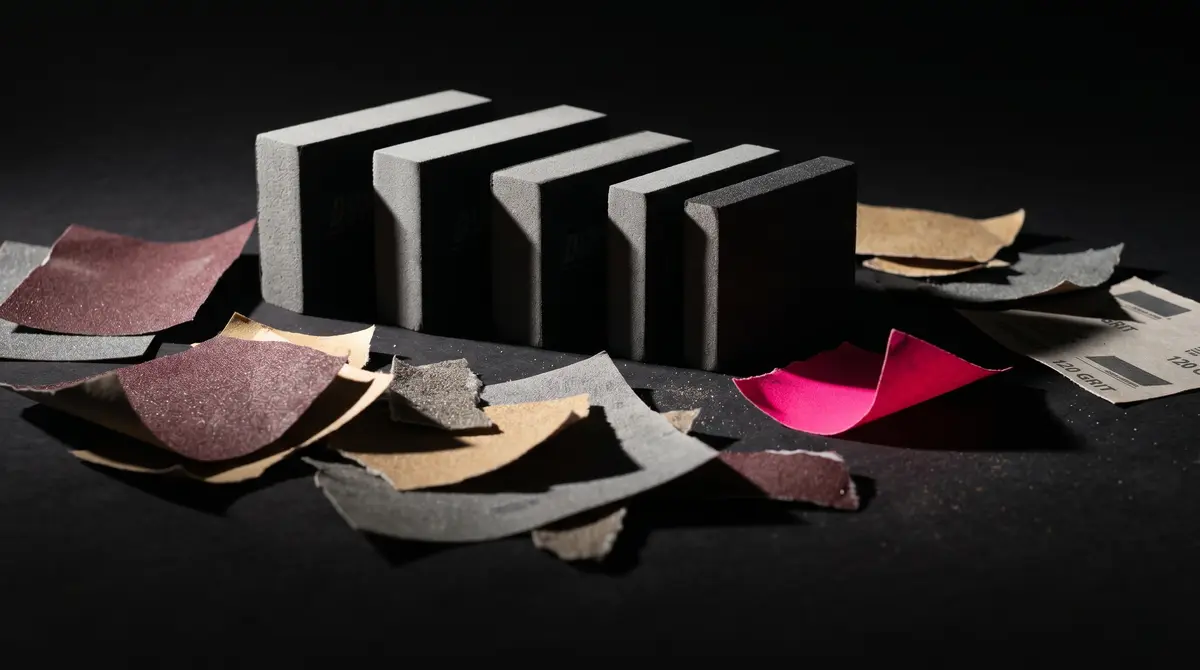
Not everything worth reaching for has to be stiff. These foam sponges give where a rigid sheet won't, pressing into a curve or a rounded edge and taking its exact shape instead of skating across the high spots. Aluminum oxide bonded to a flexible block, angled on one end to slip into corners: they get into the tight interior work that flat paper just sulks at from the outside.
The wet-or-dry rating is where they earn the budget price. Load one up, rinse it under the tap when it clogs, wring it out, and it comes back ready to keep going: a sponge that clears itself and returns for another round instead of gumming into a paperweight. Handy on drywall mud, on curved trim, on any spot where a little conformity beats a lot of rigidity.
At 3.8 and budget tier, treat them as the friendly gap-filler in your kit, not the star. They won't cut as fast or last as long as a good sheet on a block, and the grit range is broad rather than precise. But for corners, contours, and wet work, they do a job the stiff stuff simply can't reach.
Use it when
The fit is obvious.
- · Reach for the 3M Angled Sanding Sponges when the job is drywall, wet sanding, and curved surfaces: that is the fight it was built for.
- · Aluminum oxide is the reliable one: cheap, tough, no surprises and no complaints. It will outlast your patience before it outlasts the job.
- · Reach for a sponge or pad when the surface curves, flexes, or gets wet and rigid paper keeps fighting you.
Skip it when
The job asks for something else.
- · Leave it if the job is heavy stock removal: a firmer abrasive cuts faster and sulks less.
- · Leave it if longevity and cut speed matter more than the price: cheap abrasive is cheap for reasons you feel on the tenth sheet.
- · Leave it if you need dead-flat pressure across a broad panel; foam gives where you least want it to.
Best for
Where it earns its keep.
- · drywall
- · wet sanding
- · curved surfaces
Keep moving
Useful next clicks.
Before you buy
Compare it head to head.
3M Angled Sanding Sponges (6-pack), Wet or Dry vs. Drywall Pole Sander Kit, 81" + 15 Sheets (80–240 grit)
Two halves of the same drywall job.
Read the comparison →
3M Angled Sanding Sponges (6-pack), Wet or Dry vs. Dura-Block AF44 Six-Piece Block Set
Conform to the contour, or flatten it.
Read the comparison →
Buyer questions
The practical questions.
What is the 3M Angled Sanding Sponges actually good at?
Wet-or-dry foam that gets into the corners rigid paper sulks about. Squeezes into any contour, rinses clean, and comes back ready. Angled for corners. Not everything worth reaching for needs to be rigid. In short: it earns its keep on drywall, wet sanding, and curved surfaces.
Is fine to coarse the right grit lane for this?
Treat it as a sponges decision first. Reach for a sponge or pad when the surface curves, flexes, or gets wet and rigid paper keeps fighting you.
What should you put it up against before buying?
Start with 3M Angled Sanding Sponges (6-pack), Wet or Dry vs. Drywall Pole Sander Kit, 81" + 15 Sheets (80–240 grit) and 3M Angled Sanding Sponges (6-pack), Wet or Dry vs. Dura-Block AF44 Six-Piece Block Set. Those pages show exactly where this pick wins and where a nearby one quietly does it better.
Rough start. Smooth finish. The gap between is where the work happens.
Next step
Go deeper.
House rule
UltraRough earns a small commission on Amazon links. Your price is identical. Our take doesn't soften for anyone.