Discs
Pro
Grit · 80-400 assorted
Mirka Gold 5-inch Hook & Loop Disc Assortment
Clicks in smooth. Finnish-made. Doesn't ask you to stop.
Discs
This lineup leans hardest into Festool sanders, 6-inch orbital sanders, heavy stock removal, paint prep. Start with the form, then narrow by grit and price tier.
Reviewed
78
Current picks in this form factor.
Common grit lanes
5
Relevant grit pages currently connected to this form.
Head to head
4
Comparison pages featuring this format right now.
Choose this form when
Skip this form when
Starting points
Clicks in smooth. Finnish-made. Doesn't ask you to stop.
The grits between the rough work and the reveal.
50-pack. Go through them fast. Always have more.
Clicks in smooth. Finnish-made. Doesn't ask you to stop.
Finnish-made, stearate-coated so they don't load mid-stroke. Auto-body finishers keep a stack and don't explain themselves to anyone.
50-pack. Go through them fast. Always have more.
50 discs at 120 grit. For the kind of work where you go through them fast and aren't planning to slow down.
Precision-shaped grain. Finds the angle and works it deep.
Each grain is precision-shaped to a cutting edge. It doesn't rub; it cuts. The first pass tells you everything you need to know.
For the hard surfaces that don't open up for just anything.
For the surfaces that don't let just anything in. Diamond grain on stone, glass, and ceramic is a completely different sensation from regular abrasives.
3000-grit pyramid grain. Smooth all the way through. Reads like silk.
Pyramid-cut grain runs smooth and consistent all the way to the edge of the disc. Auto-body finishers call it cheating. We call it knowing what you're doing.
The grits between the rough work and the reveal.
The grits that live between the coarse work and the mirror finish. Wet or dry, silicon carbide cuts both ways.
Dust goes through the disc instead of loading it. The math changes.
Net construction means the dust goes straight through instead of loading the surface. Lasts noticeably longer than anything solid. The first one you try explains the reputation.
50 discs at 220. No reason to skip the step.
50 discs at 220 means you never shortchange the final step. Between coats, before stain, after the 150. Change them when they stop cutting.
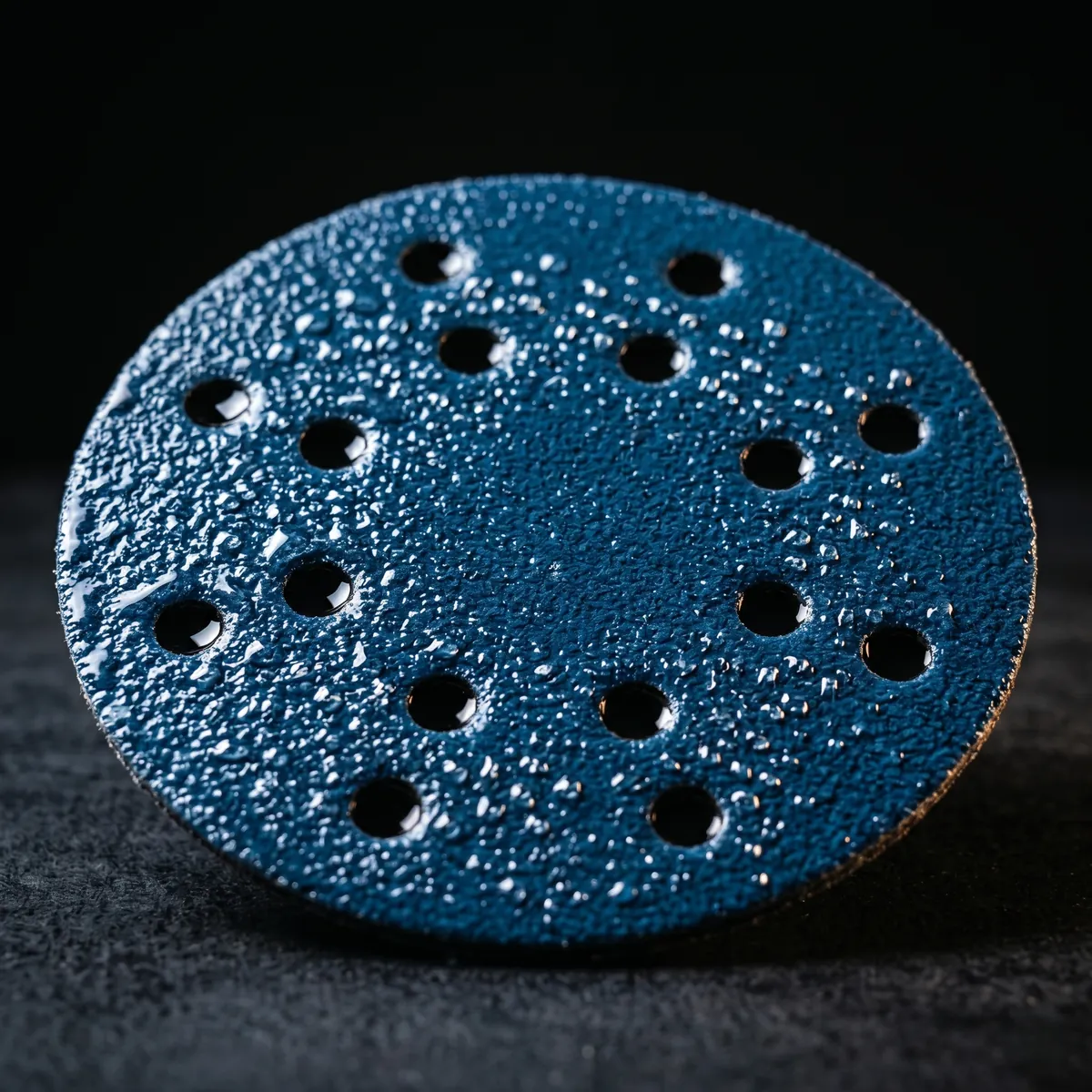
The disc the Festool deserves. Everything else is settling.
German ceramic grain in an engineered pattern that loads slower and cuts cleaner. Makes the sander beneath it perform the way it was designed to.
Between coats. Every time. No excuses.
320 is between-coat territory. Knocks down nibs without touching what's underneath. The grit that gets used more than it gets talked about.
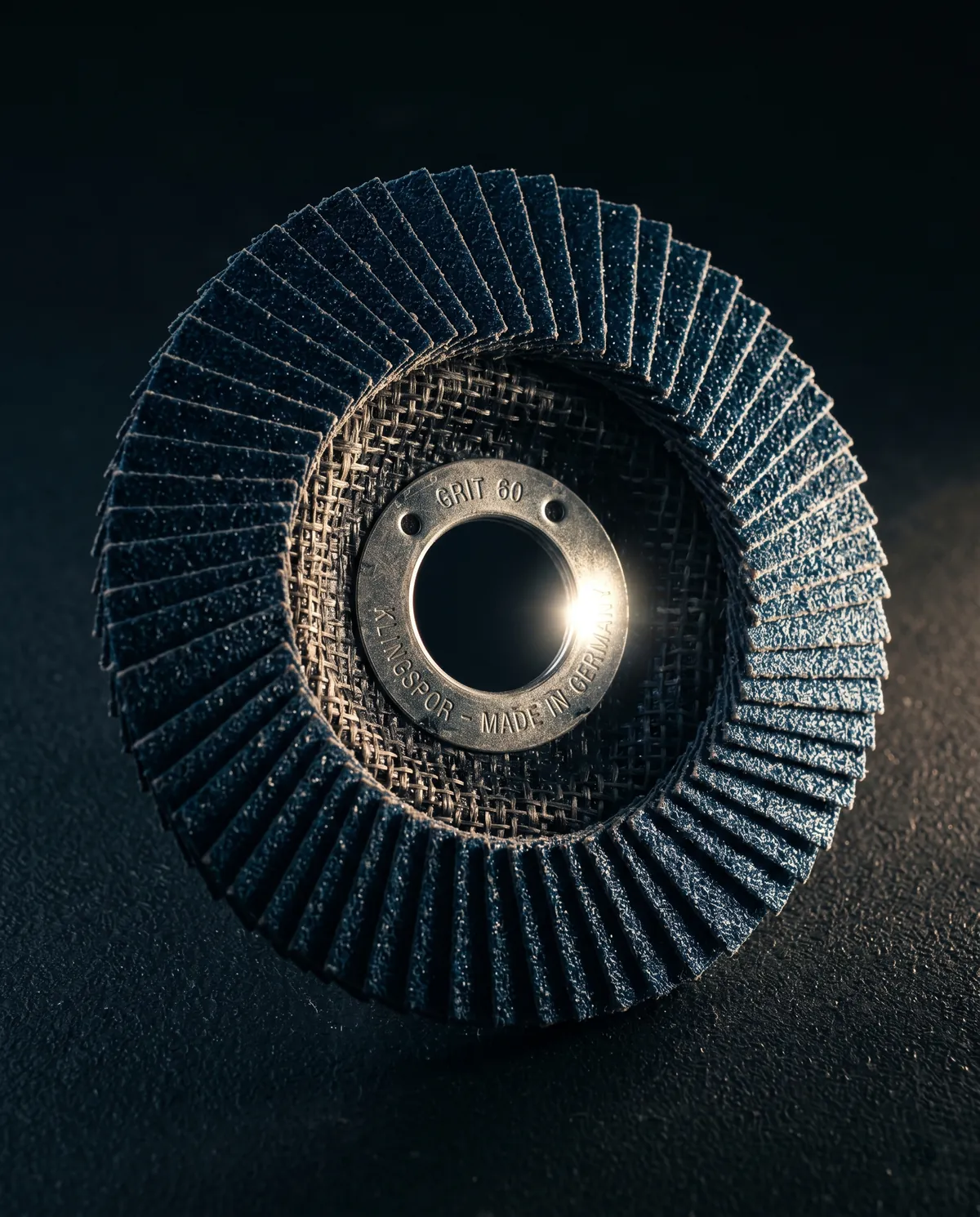
A hundred discs. Change them when they're done, not when you run out.
A hundred discs at a price that lets you change them when they're done instead of when you can afford to. The working shop alternative to premium disc packs.

Zirconia at 60. Goes through weld and rust like it's been waiting.
Zirconia flap on an angle grinder backing. Cuts through metal, welds, and old paint without loading. Faster than grinding, smoother than a cutoff wheel.

Where orange-peel becomes mirror prep. Pyramid grain keeps it clean.
Final polish prep. Pyramid grain pattern keeps the surface from loading. Takes the orange-peel out and hands it off to compound ready to shine.
Three-micron pyramid grain. The step where the scratches stop being visible.
Pyramid-structured aluminum oxide in A3 grade — 3 microns, P3000 equivalent. Clear-coat specialists use it to pull the last deep scratches before compound takes over.
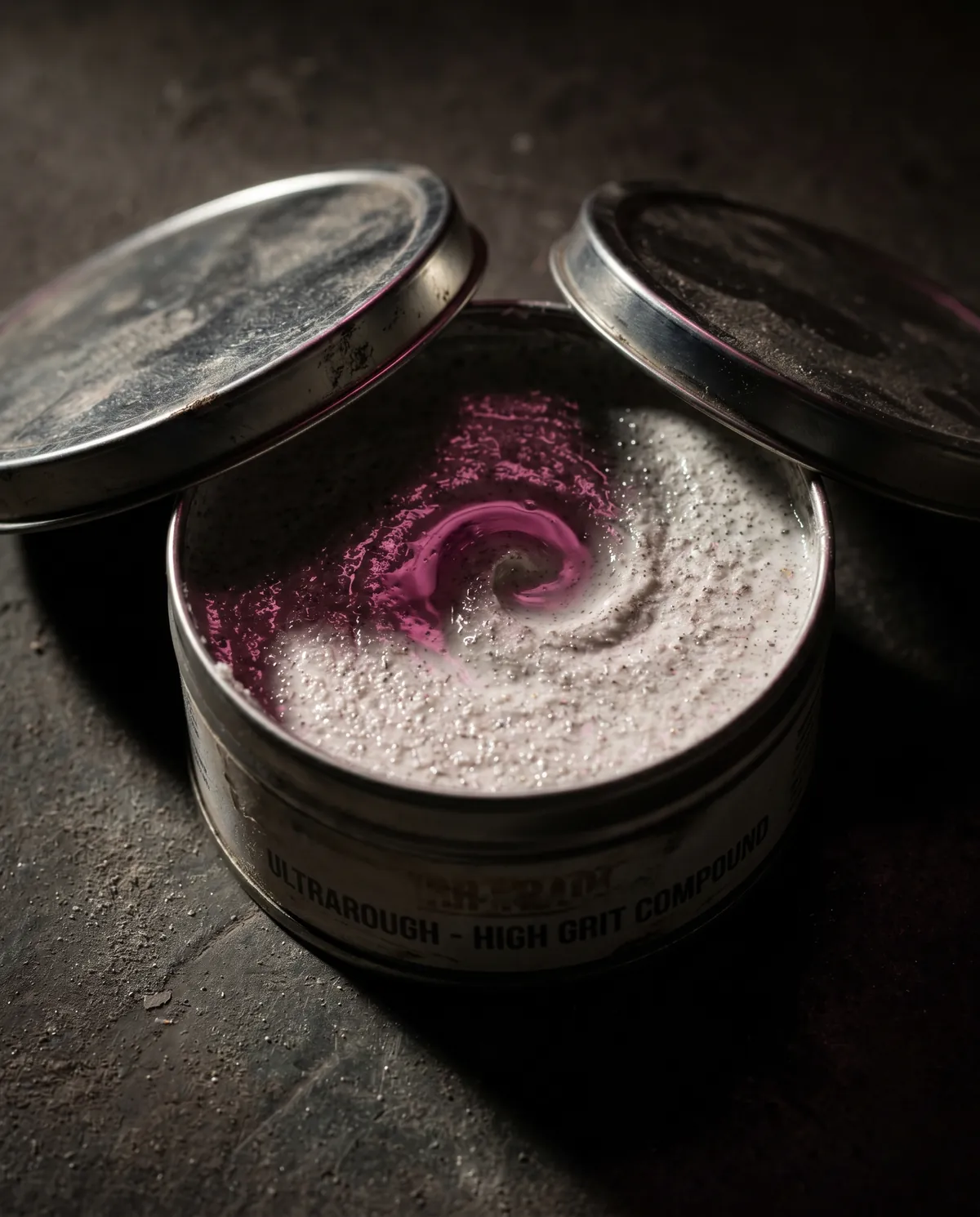
Soft foam. Even application. The step between grit and gloss.
Soft foam takes compound or polish without splatter. The application step that turns your arm into a precision tool.
Mirka ceramic. Latest generation. Stays sharp when the others stop.
Mirka's ceramic-grain flagship disc. Self-sharpening grain on a backing that loads slower across the full disc life. Cuts faster than aluminum oxide, finishes cleaner than most ceramic alternatives.
The step between 60 and finish on metal.
Zirconia flap on an angle grinder backing. Medium aggression for weld cleanup and prep without the deep bite of 60.
Doesn't clog. Backing stays true. Made for the angle grinder.
German zirconia on a flap backing. Cuts metal, doesn't clog, and the backing stays true without warping.
15 discs. Three grits. Metal work at cost.
Three grits, affordable. The metal shop alternative when quantity matters more than premium backing.
Ceramic grain, through-the-net extraction. Lasts longer. Cuts cleaner.
Ceramic grain on the same polyamide net that made Abranet the shop standard. Cuts faster and lasts longer than standard Abranet — the disc auto shops reach for when run time matters.
Russian tech. Faster cutting. Fifty discs at a real price.
Russian abrasive tech. Faster cutting than aluminum oxide. Fifty discs, full grit range, price that doesn't embarrass the shop.
German-made. Zirconia grain. The serious alternative.
German engineering. Zirconia grain in five grits. Loads slower than aluminum oxide, cuts faster, finishes cleaner.
Six-inch format. Festool quality. Everything the name promises.
Larger format for 6-inch sanders. Same German engineering, same pyramid grain pattern that makes every pass count.
Six-inch format. Finnish-made. Still doesn't load, still doesn't quit.
The 6-inch format of the disc auto-body finishers reach for first. Stearate-coated so they load slow and cut clean through the full session.
80 at 6 inches. Start coarse. Cover more ground. Never slow down.
Ceramic grain on a 6-inch platform. Aggressive enough to open up rough stock, built for the machine that runs all day without complaints.
25 discs at 220. Bigger format, same finish.
25 discs at 220 on the larger platform. Between coats, before stain, after the 150. The format that covers more ground without asking you to slow down.
Six-inch Hookit. More coverage per pass, same clean result.
Hook-and-loop in the 6-inch format. The full grit range for larger orbitals and everything that demands a broader stroke.
Precision-shaped grain at 6 inches. The math is different.
Precision-shaped ceramic grain at 6 inches. The geometry that cuts instead of rubs, on a platform big enough to finish a cabinet door in one pass.
50 at 80. The quantity that doesn't make you hesitate at the start.
50 discs at 80. The aggressive opener for the random orbital — fast, repeatable, and never shortchanged at the start of a session.
80 is where it begins. 25 discs means it can begin as many times as needed.
80-grit is where most projects start and where most people find out whether their abrasive will keep up. This one will.
Festool grain on drywall. The machine finally has paper that keeps up.
German engineering on the drywall sander that deserves it. Pyramid grain loads slower than anything else at this task and keeps cutting longer.
The step before the first stroke. A sharp edge changes everything after.
The diamond plate that gives you a cutting edge before the sandpaper sees the wood. Extra fine for honing, not for stock removal.
Ten profiles. Diamond grain. Gets into what everything else bounces off.
Diamond-coated files in ten profiles for the surfaces that resist everything else. Deburring, filing, and detail shaping on metal, stone, and glass.
Japanese diamond at 140. Fast, flat, and stays that way.
Japanese-made diamond plate for aggressive flattening of sharpening stones, plane soles, and hard surfaces. 140 cuts fast and stays flat.
Coarse side to set the edge. Fine side to make it work.
Silicon carbide on both sides, coarse and fine. For bringing an edge back from dull to functional before the finishing stone takes over.
40 grit. Finnish-made. Opens what everything else just scratches.
Stearate-coated aluminum oxide at 40 grit: the Finnish paper that opens up rough stock without glazing over. Fast cut, long life, stays aggressive through the full session.
The pass that cleans up after the opening act.
The middle pass between aggressive and refined. 60 grit cleans up what 40 left behind without getting sentimental about it.
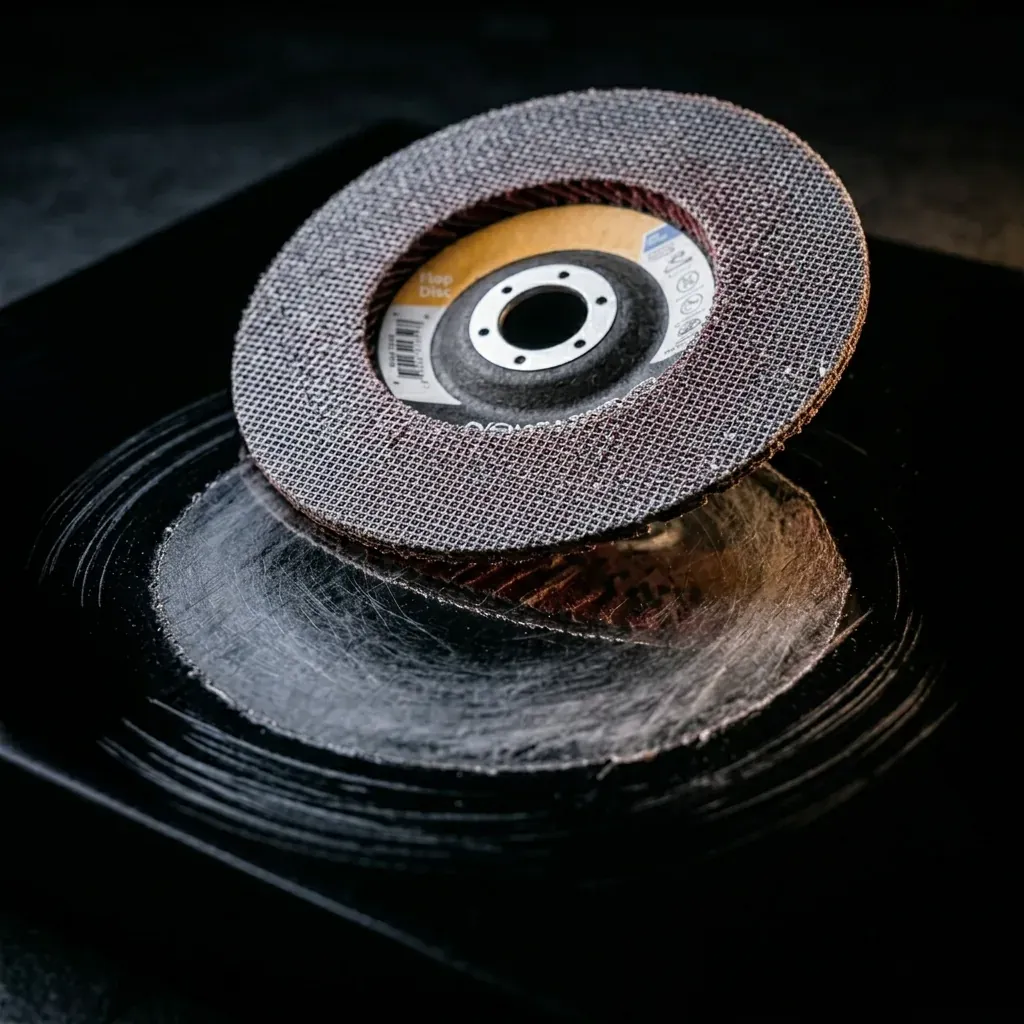
Stearate-coated so it doesn't load. Stays sharp because it has to.
Mirka Gold at 80: stearate-loaded so it resists resin and pitch. The grit every serious woodworker starts a session with when the surface has something to answer for.
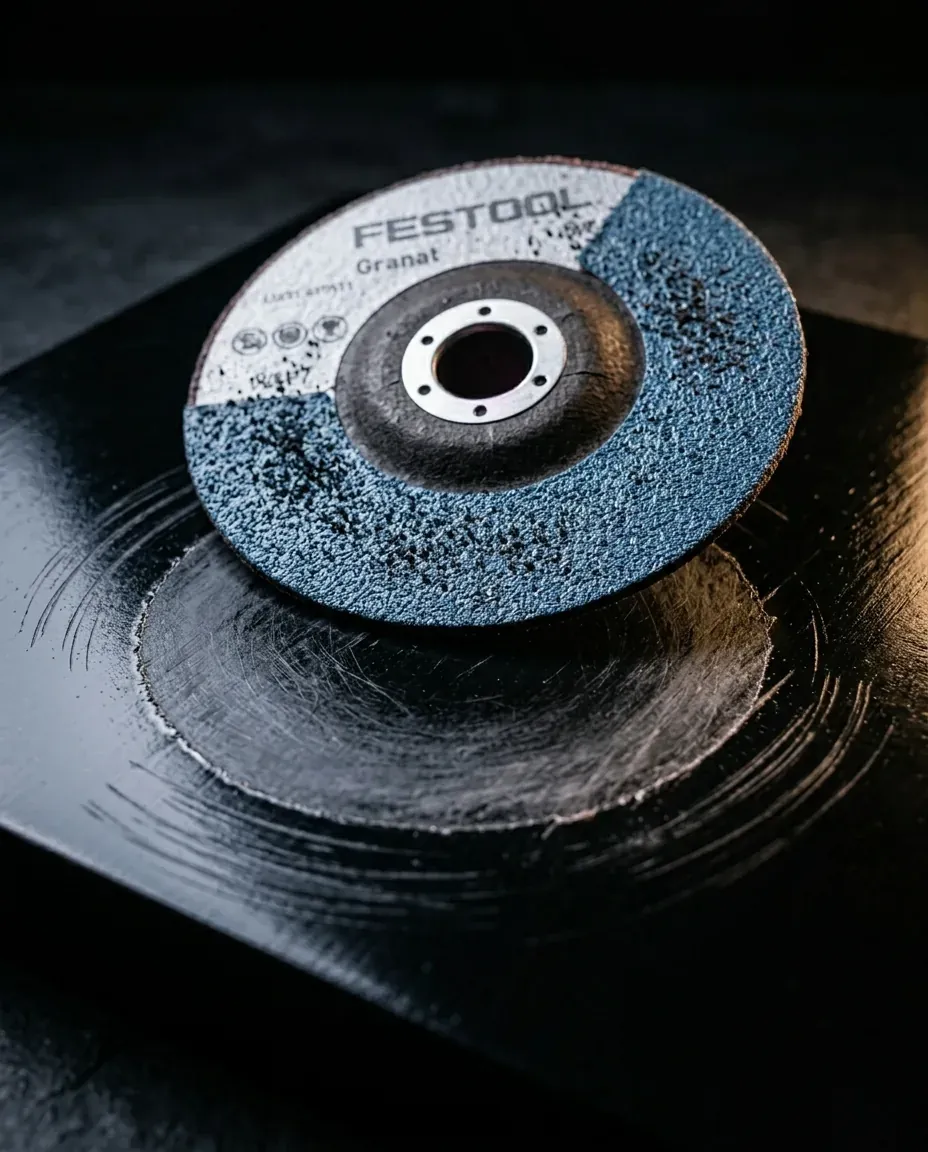
Pyramid grain that sharpens itself. Opens the surface, then steps back.
Pyramid-structured ceramic grain at the coarsest working grit. Granat at 40 removes stock fast and the structure self-sharpens instead of rounding off.
German geometry at 60. Removes instead of polishing — until you're ready.
Granat at 60 is the structured ceramic between the aggressive open and the fine finish. Self-sharpening grain means it keeps removing material instead of polishing it.
80 on Granat: where precision starts and the surface first takes notice.
The Granat 80 is where most Festool operators start a finishing sequence. Ceramic pyramid grain that cuts clean and transitions to 100 or 120 without apology.
Forty grit. Ceramic. Not here to make friends with the surface.
Ceramic grain at 40 on a Diablo disc: the aggressive opener that handles thick paint, heavy stock, and any surface that thinks it has something to hide.
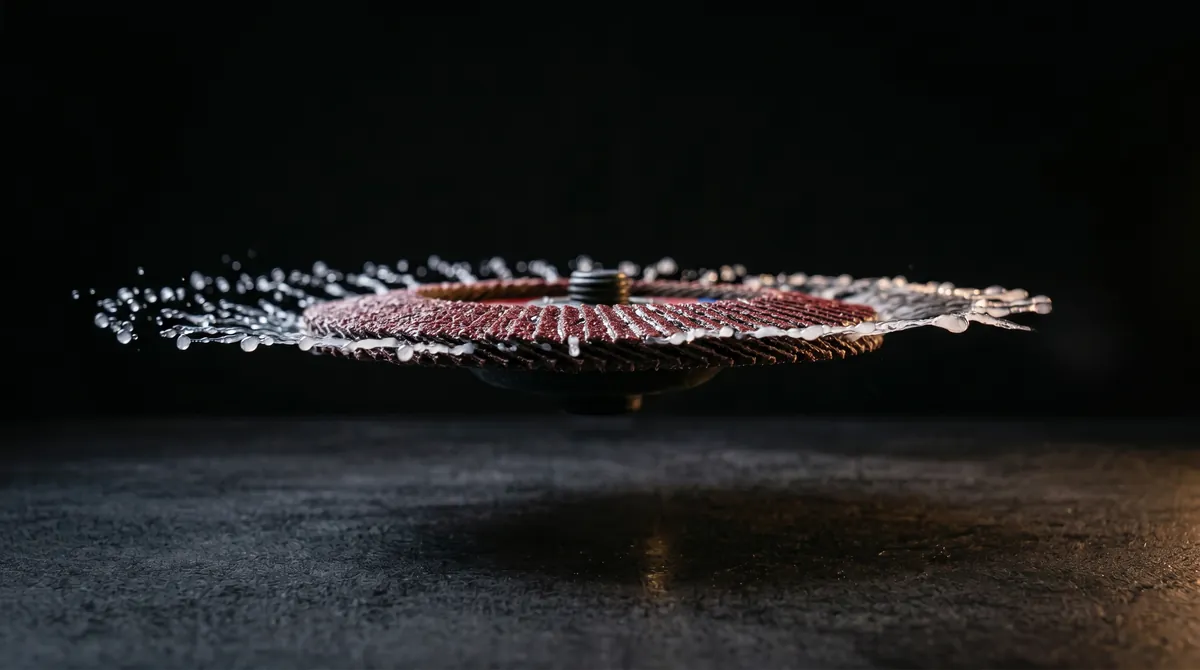
60 grit gets it to where the real work can begin. Every time.
Between the rough opener and the prep pass. 60 grit brings the surface into range without settling for half-finished.
40 grit at 6 inches. More surface covered with each pass.
40 grit across a 6-inch surface: maximum coverage at maximum coarseness. For stock removal that has to happen at scale.
6 inches at 60. Covers more. Leaves nothing behind.
The 6-inch disc at 60: enough reach for large panels, enough precision for work that actually matters. Gets the surface ready without asking too much of whoever comes after.
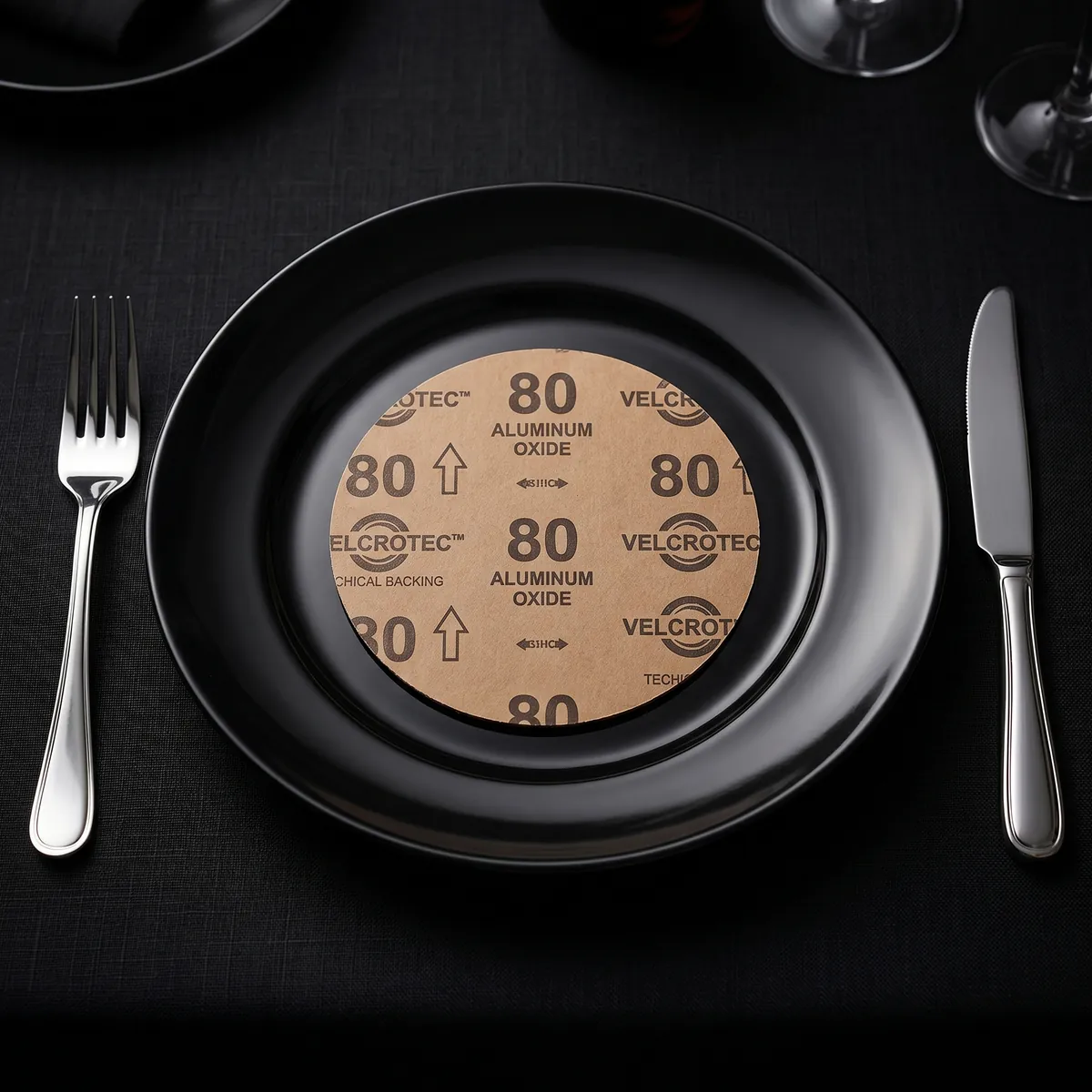
120 at 6 inches. A door done in one pass.
120 grit on a 6-inch platform: the refinement pass that covers cabinet doors and large panels in one go. Ceramic that keeps cutting past the point aluminum oxide would quit.
40 grit Hookit. Changes fast. Cuts faster.
Hookit hook-and-loop at 40 grit: fast changes, fast cutting. For when the surface still has too much to say and you need to interrupt it efficiently.
The disc between the opening and the preparation.
60 grit in the Hookit system: the transition disc that bridges coarse and prep work. Stays on the machine until you decide to move on, not before.
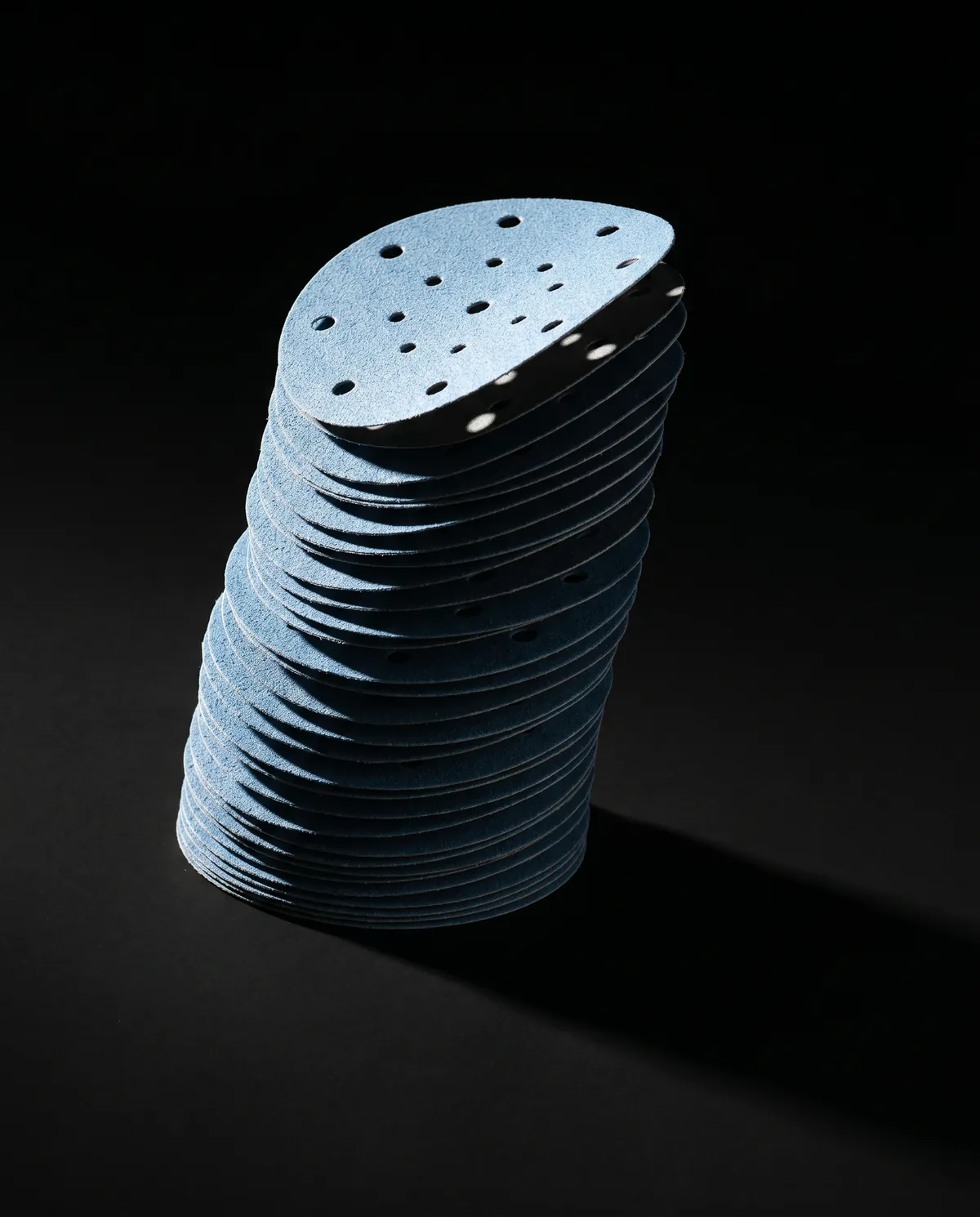
The pass that makes 150 feel earned.
120-grit Hookit for the pass that makes 150 feel earned. Opens the pores without closing off the next step.
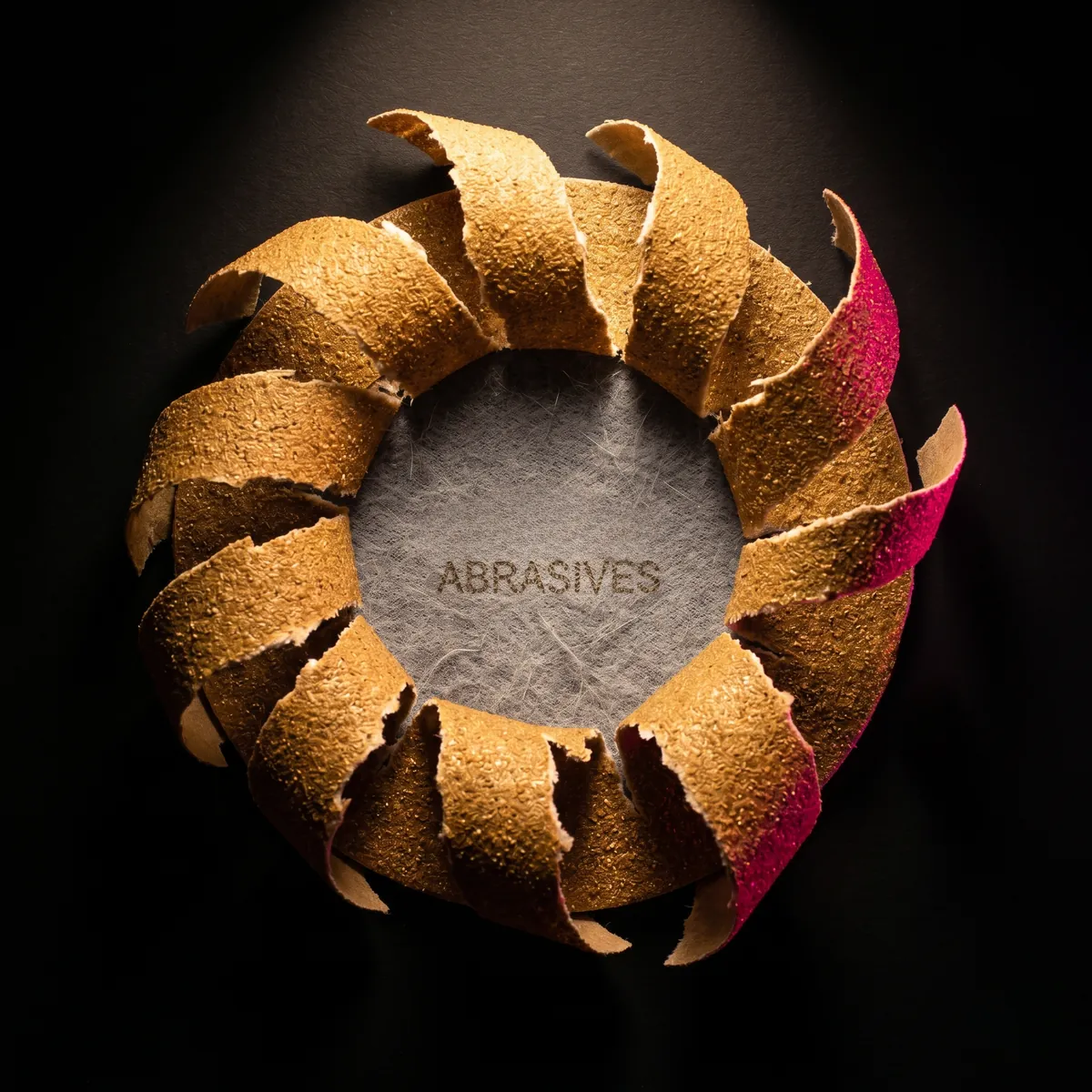
Finnish coarseness at 6 inches. Shows large surfaces who runs the session.
Finnish stearate-coated aluminum oxide at the coarsest working grit on a 6-inch backing. Built for the big sander and the big surface.
Where aggressive gives way to intentional. 60 grit at scale.
Where the 6-inch session transitions from aggressive to deliberate. Mirka Gold at 60 cleans up the coarse pass without losing track of what comes next.
80 grit, 6 inches. Finnish restraint at the opening act.
80 on a 6-inch Mirka Gold disc: the opening prep grit that covers furniture panels and cabinet sides without burning through its welcome.
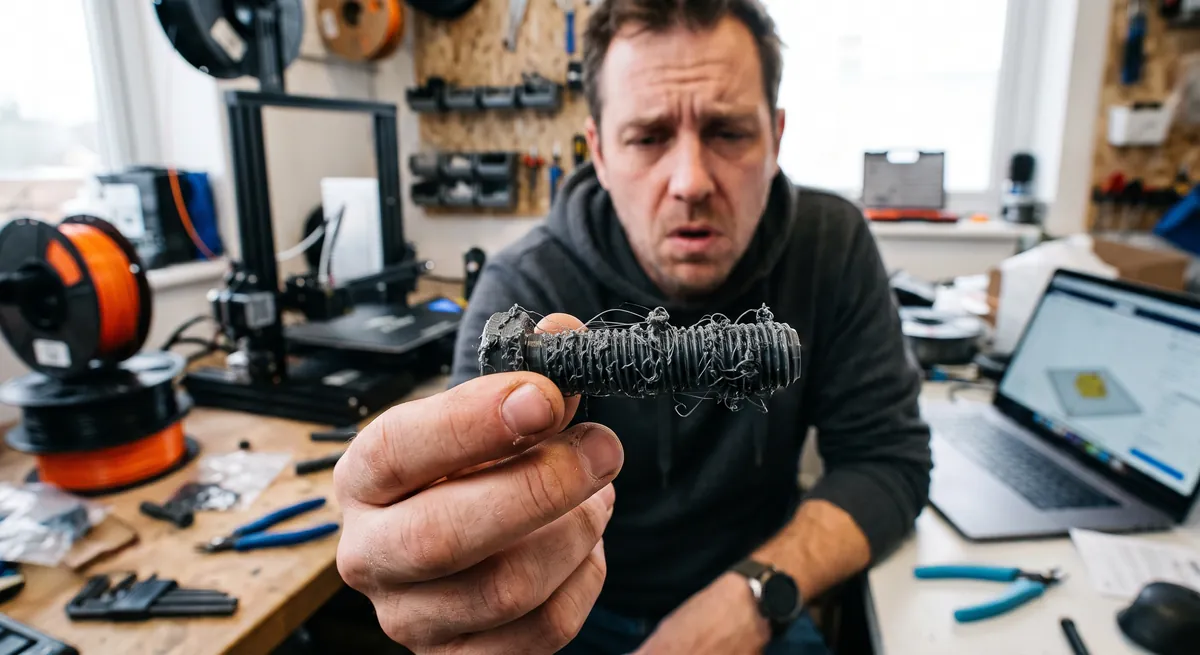
Three grits on a flat diamond surface. The tool that never needs dressing.
Diamond-coated flat lapping pads in coarse, medium, and fine for flattening chisels, plane blades, and any edge that refuses to cooperate on a conventional stone.
The surface that stays flat. Everything sharpened on it becomes what it should be.
DMT precision diamond at 1200 mesh for flat lapping of plane soles, chisel backs, and waterstones that have dished over time. The reference surface that stays flat.
Two grits, one block. Sets the edge and finishes it without switching tools.
Double-sided diamond block: 325 to set the bevel, 1200 to refine it. The compact format that works dry and delivers both passes without switching tools.
Diamond on a file that goes where the bench stone cannot reach.
Nickel-bonded diamond on flat file blanks for serrated blades, carving tools, and anything a bench stone never reaches. Three grits, each with a handle, built for working in place.
Both grits. No oil. No fuss. Sharp before you put it back in the drawer.
Compact diamond stone with both grits on a single paddle. No special oil, no leveling, no ceremony. Get the blade sharp and get back to work.
The pass that decides whether the surface is ready. Granat makes it count.
The pass between opening and finishing. Granat 100 is where the surface stops being rough and starts being something worth spending more time on.
Standard prep. German pyramid grain. Everything after starts here.
Standard prep grit on German pyramid ceramic. Granat 120 is the setup shot — every finish coat that follows has this disc to thank.
Pre-finish. When the surface has finally done what you needed it to do.
Pre-finish without apology. Granat 150 is where stopping and coating actually feels like the right call — the grain open, the surface smooth, the decision made.
Hardwood pre-stain. The grain stays open and invites what comes next.
Hardwood pre-stain at 180: the grain stays open and the surface asks for what comes next. Pyramid ceramic keeps cutting at the fine end where aluminum oxide starts to disappear.
220. The dress rehearsal. Granat makes sure the surface shows up ready.
220 is the dress rehearsal for the finish coat. Granat does it with ceramic grain that actually cuts at this grit instead of just polishing the surface into submission.
Between coats. Smooths what the first coat raised. Leaves the color alone.
Between coats with pyramid ceramic. Granat 320 smooths what the first coat raised without pulling the color back off, which is the whole point of this pass.
Extra fine. Holds its edge past where everything else gave up.
The extra-fine pass most abrasives skip past. Granat 400 holds its grain through multiple coats of lacquer where standard aluminum oxide would have quit two passes ago.
Fine enough to finish. Precise enough to leave no evidence of the effort.
Wet or dry on the finish coat. Granat 600 levels without leaving witness marks — the German grain still working at a grit where most discs are just rubbing back and forth.
The last pass before the gloss answers every decision that came before it.
The final pass before the polish takes over. Ultra-fine German ceramic for the work that will actually be seen — where the quality of the abrasive determines the quality of the result.
Mesh that breathes. Finnish grain that does not load. Both in the same disc.
Mesh abrasive that clears dust as it cuts instead of letting it build up and dull the grain. ABRANET at 80 is the Finnish answer to orbital sanding that actually works with the dust extraction instead of against it.
The everyday prep grit. Open mesh, Finnish abrasive, no compromise.
ABRANET mesh at 120: the everyday prep grit in a format that keeps cutting because the dust has somewhere to go. Woodworkers who switched never go back to conventional paper at this grit.
Open mesh pre-finish. The surface stays clean because the dust actually leaves.
The pre-finish pass that the dust-extraction system can actually get clean. ABRANET at 150 leaves an open surface rather than a surface packed with its own residue.
Fine grit in a form that does not clog. Still cutting when the session ends.
Fine sanding in a mesh format: ABRANET at 220 delivers the smoothness of fine paper without the clogging that usually comes with it. The disc that leaves the surface ready and the vacuum happy.
40 grit. Ceramic zirconia. For the metal that is not going to cooperate quietly.
Ceramic zirconia flap disc at the coarsest angle-grinder grit: for weld cleanup, aggressive stock removal, and cast iron that does not care what you think about it. Norton Blaze grain that keeps working past the flap.
Between the rough pass and the prep pass. The grit that knows what it owes each side.
The transition grit between aggressive material removal and surface prep. Norton Blaze 60 cleans up after the 40 without turning into finishing work — the flap disc that knows its place in the sequence.
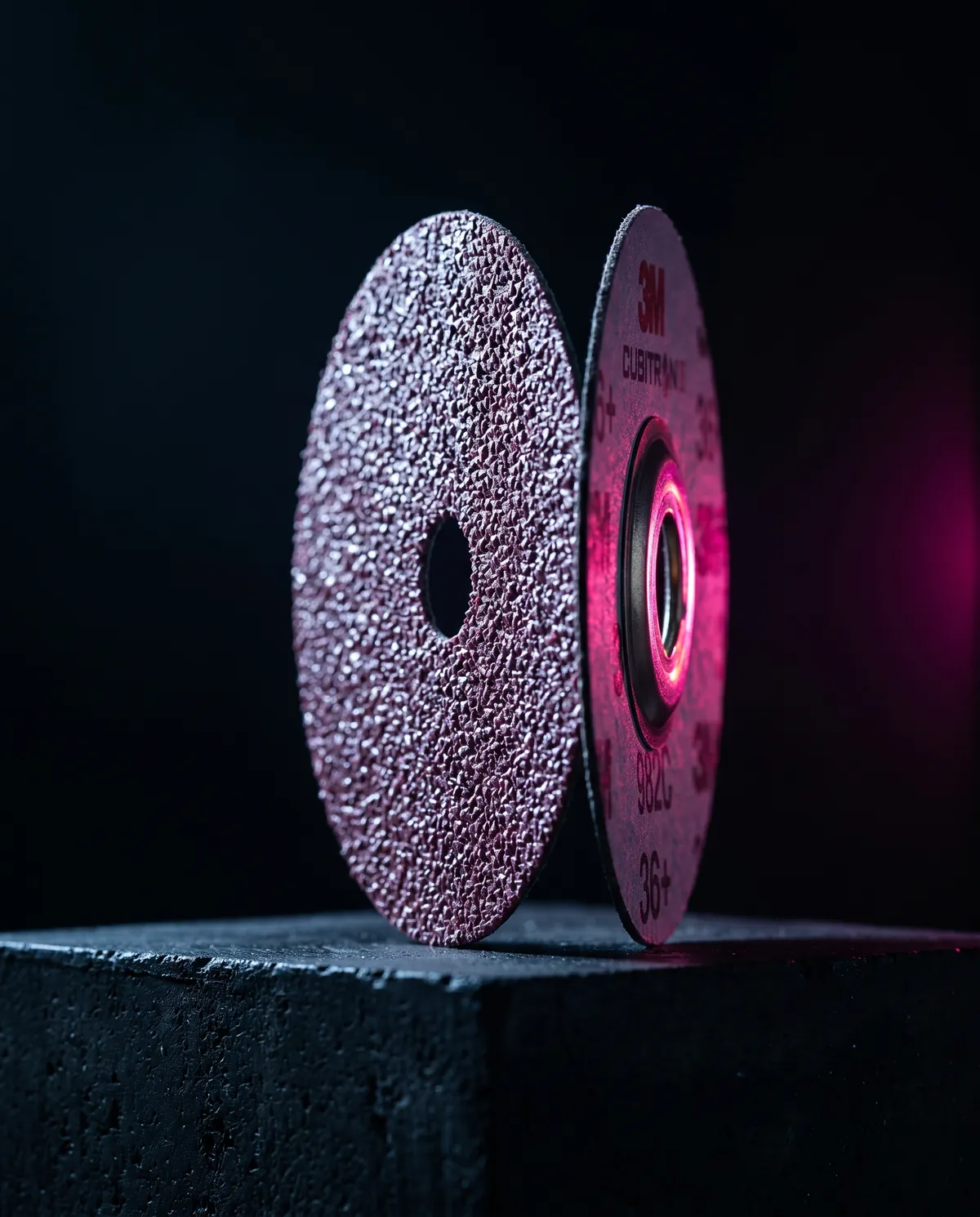
Prep grit for metal going somewhere. Smooth, even, ready for what follows.
The standard prep grit for metal surfaces going to paint or powder coat. Norton Blaze 80 levels, smooths, and sets anchor profile without cutting deeper than necessary.
Fine metal finishing at angle-grinder speed. The grain direction runs consistent.
Fine flap disc work for metal finishing before primer, polishing prep, and stainless grain direction runs. Norton Blaze at 120 produces a consistent scratch pattern without the hand-sanding time.
The 5-inch at 40: covers more. Moves it faster. Same Blaze grain underneath.
5-inch coarse flap at 40: more contact area per pass on large weldments, structural steel, and anything where the 4.5-inch format is working too hard for what the surface needs.
The 5-inch at 60. Where the coarse pass hands off to something more deliberate.
The 5-inch transition disc at 60 for larger surface areas. Where the coarse pass hands off to prep without requiring three intermediate steps to get there.
Prep at 5 inches. More coverage, same precision where the coating matters.
80 grit on the 5-inch platform: the prep grit for larger metal work going to paint or coat. Covers panels, frames, and structural steel at a rate that hand sanding cannot approach.
Fine finish on a 5-inch platform. Consistent scratch across every inch of the panel.
5-inch fine flap at 120 for the finishing pass on metal before primer or polish. Blaze ceramic keeps the scratch pattern consistent across a large panel where inconsistency would show.
Head to head
Mirka Gold 5-inch Hook & Loop Disc Assortment vs. Diablo 5-inch ROS Discs, 120 Grit (50-pack)
Finnish precision or American volume.
Read the comparison →
3M Wetordry, 3000 Grit vs. 3M Trizact P3000 Hookit Disc
Same grit. Very different conversation.
Read the comparison →
Diablo 5-inch ROS Discs, 120 Grit (50-pack) vs. 3M Cubitron II Hookit Disc 5-inch
Fifty cheap discs or one disc that cuts like five.
Read the comparison →
Mirka Gold 5-inch Hook & Loop Disc Assortment vs. 5-Inch Random Orbital Sander + Disc Starter Bundle
You either have the sander or you don't.
Read the comparison →
Buyer questions
Reach for discs when you already run a hook-and-loop random orbital and want fast, even coverage across broad ground.
Discs on UltraRough show up most often around Festool sanders, 6-inch orbital sanders, heavy stock removal, and paint prep. That is where this form earns its place.
Start with 40 grit, 60 grit, 80 grit, and 100 grit. Those are the numbers this form most often overlaps with in the current catalog.
Keep moving